Woodstock, NY: Small town, massive music legacy
Howdy Seekers!
We’ve been so busy poring over festival lineups, we almost forgot what a massive year 2026 is shaping up to be for tours.
The Eagles are saying farewell — in part — with a Sphere residency. AC/DC, BTS, and My Chemical Romance are conquering stadiums. Harry Styles is making himself at home at Madison Square Garden with 30 headlining concerts, all immediately sold out.
Who are you heading out to see? Let us know, and make sure you take Music Roadtrip — a free travel app for music fans —with you. We’re adding new venues and hidden gems every week, and refining the spots already in the app. If you’ve found somewhere we should include, or noticed something that needs an update, send us a note at info@musicroadtrip.com.
As for us, we’re heading to a little town in upstate New York you may have heard of...
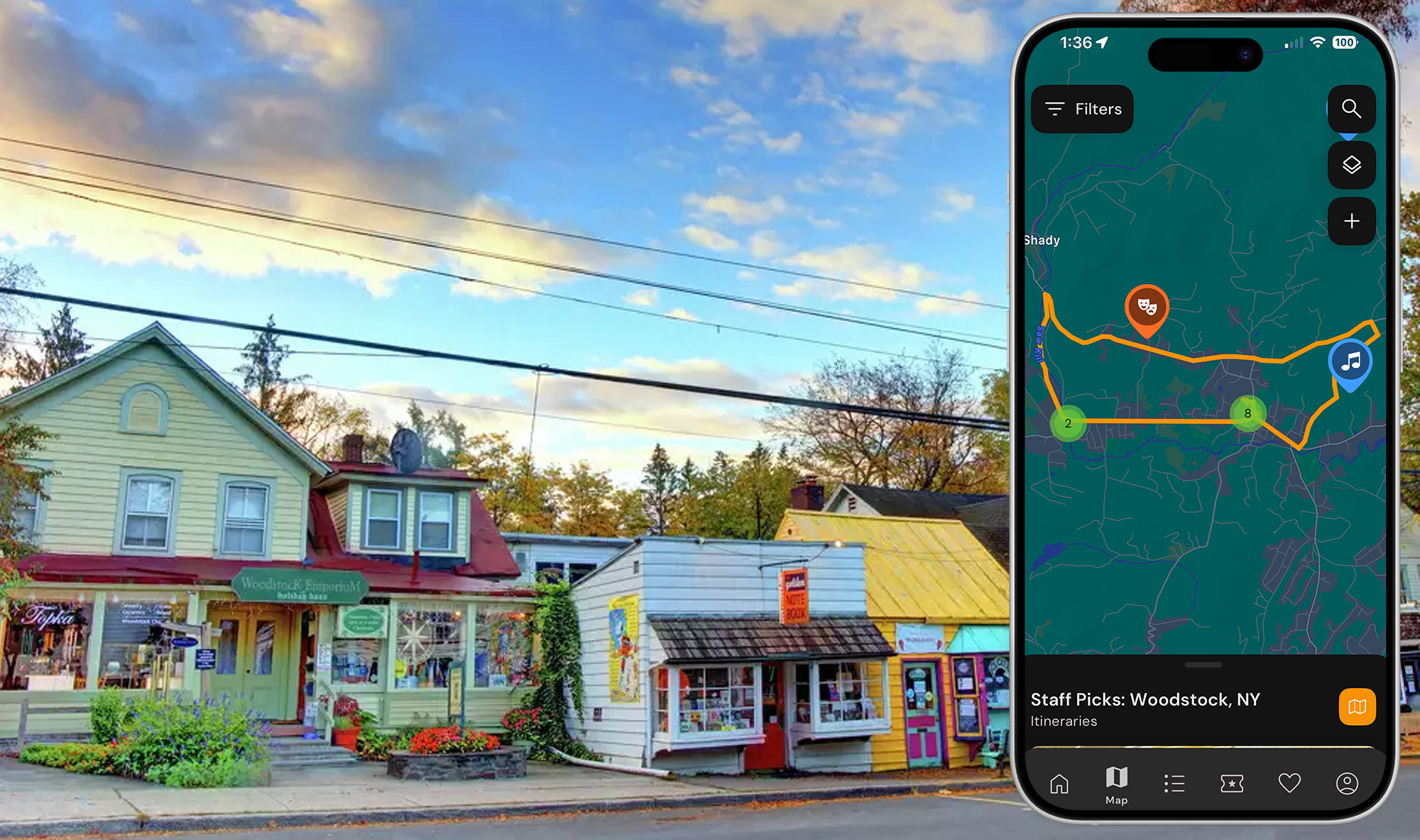
WOODSTOCK, NY
This week, we’re “going down to old, old Woodstock,” as Van Morrison once put it.
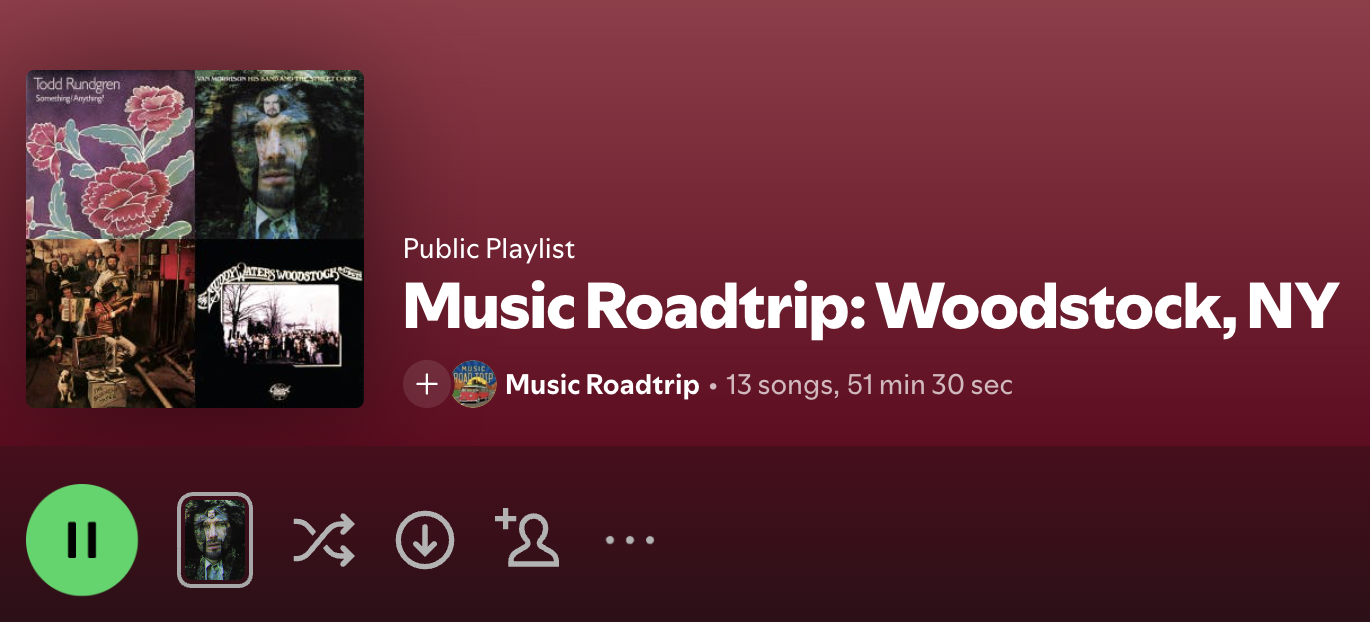
Few towns this small carry as much cultural weight as this one. Woodstock, New York has been haven for artists since the turn of the 20th century, but it became a music mecca after Bob Dylan sought refuge here in the mid-’60s. As with everything he did in those days, a wave of like-minded musicians followed. Morrison called Woodstock home while writing the songs that became Moondance; Todd Rundgren produced classic albums — including his own — at Bearsville Studios; and The Band turned a pink house in nearby Saugerties into a landmark with their staggering debut, Music From Big Pink.
There’s lots to see and experience here in a charmingly quaint footprint. And in case it saves anyone a little embarrassment: don’t ask locals where you can find the site of the 1969 Woodstock festival. That took place about 45 miles southwest in Bethel, New York.
Spend a day in the real Woodstock, though, and you’ll understand why the festival borrowed a bit of its legend.
Levon Helm Studios
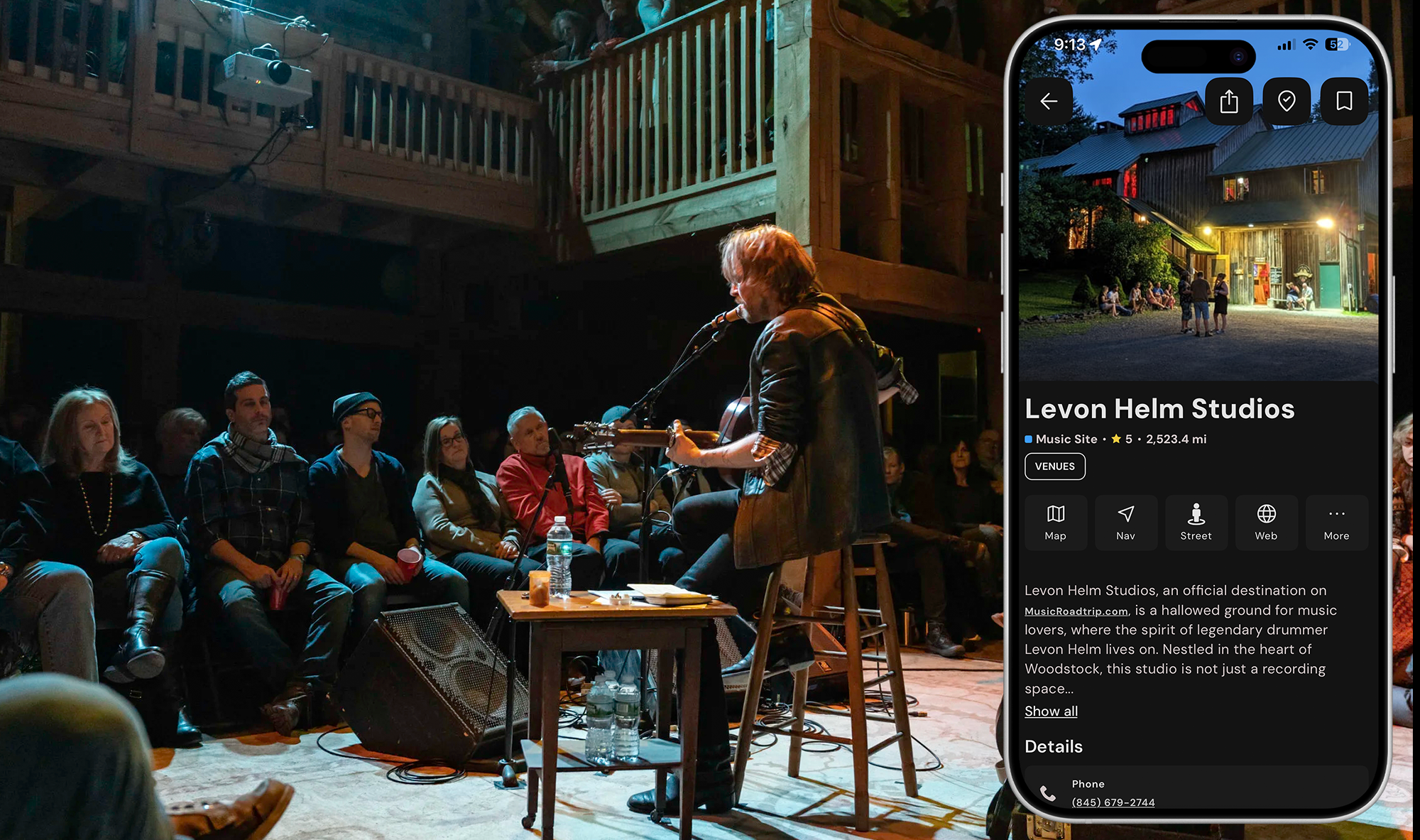
The roots of Levon Helm Studios go back to the early ’70s, when Levon Helm — drummer, songwriter and vocalist for The Band — built a rustic home and recording barn in Woodstock.
The ’90s were a trying decade for Helm. A fire destroyed most of his property, and he was diagnosed with throat cancer. But he rebuilt, underwent surgery and extensive treatment, and began hosting public concerts at the barn — now Levon Helm Studios — to help offset his medical bills.
He called the concerts “Midnight Rambles,” inspired by the traveling medicine shows he saw as a kid. At first, Helm relied on guests like Elvis Costello, Emmylou Harris, and Allen Toussaint to handle lead vocals, but his voice eventually recovered. He spent his final decade juggling the Rambles with annual tours, enjoying a deserved critical and commercial resurgence.
Since Helm’s death in 2012, a family band led by his daughter Amy Helm has continued the tradition with regular Midnight Rambles at the venue — including a May 23–24 two-night run marking Helm’s birthday. Other upcoming shows include performances by NRBQ, Richard Thompson, and Foy Vance.
Bearsville Theater
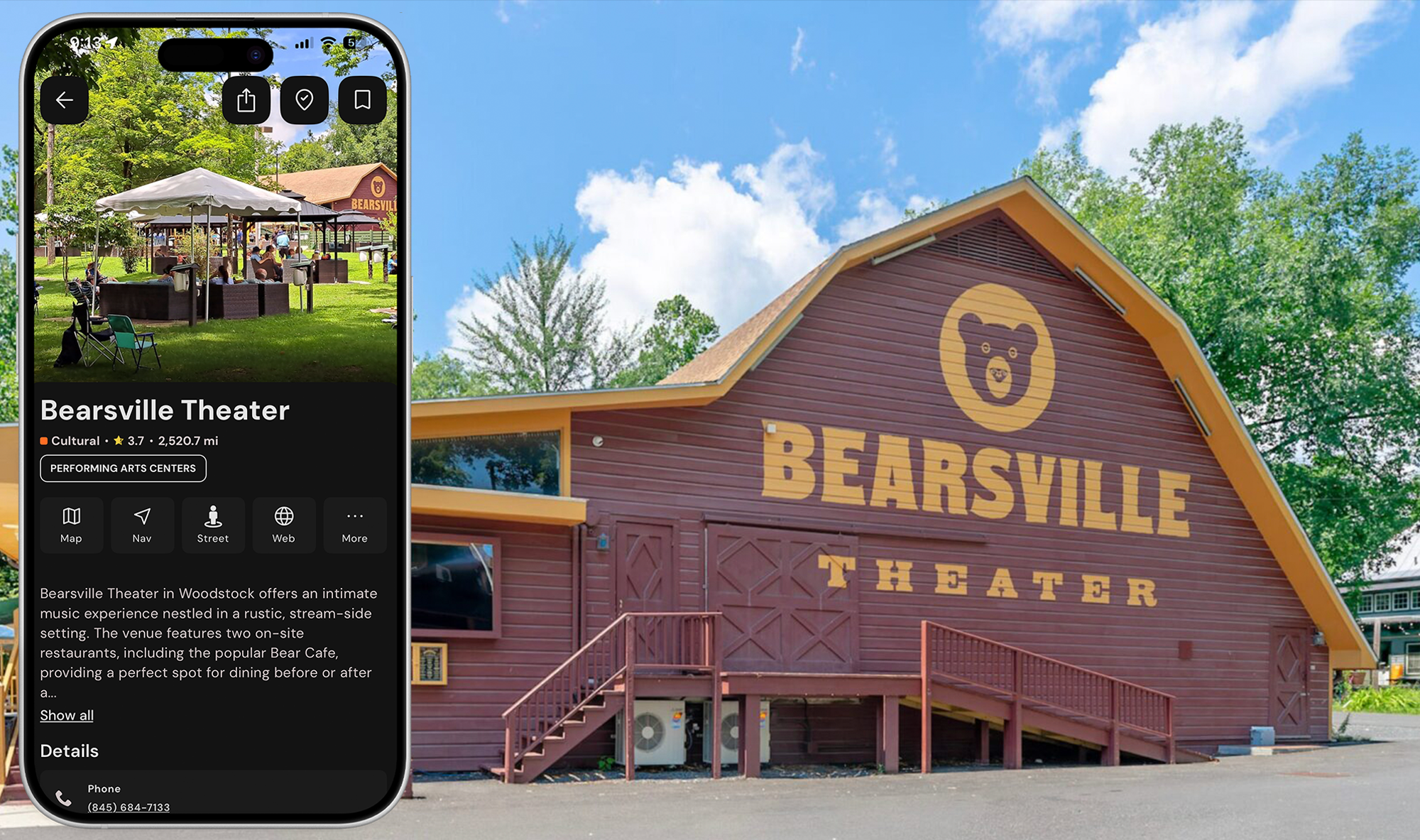
Sure, Bob Dylan inspired others to check out Woodstock — but who inspired him? That would be his manager Albert Grossman, who began visiting the town and building a creative compound here in the 1960s. That project included Bearsville Studios, where albums like Bat Out of Hell by Meat Loaf and Something/Anything? by Todd Rundgren were made.
Grossman died in 1986 while plans for Bearsville Theater were still coming together. His wife Sally Grossman — the woman on the cover of Dylan’s Bringing It All Back Home — took the reins and opened the theater three years later.
The venue was built from an 18th-century Dutch barn and designed by studio architect John Storyk, who also created Electric Lady Studios for Jimi Hendrix.
Guess what? Shows here sound incredible. The Band, Jeff Buckley, and Warren Zevon were among the first to find that out, and the concert calendar makes it clear the theater remains a magnet for touring acts. Matt Berninger, They Might Be Giants, and The Afghan Whigs all have upcoming dates here.
If you catch a show, come early and take a stroll behind the property. You’ll find Albert Grossman’s modest memorial stone among the trees and benches.
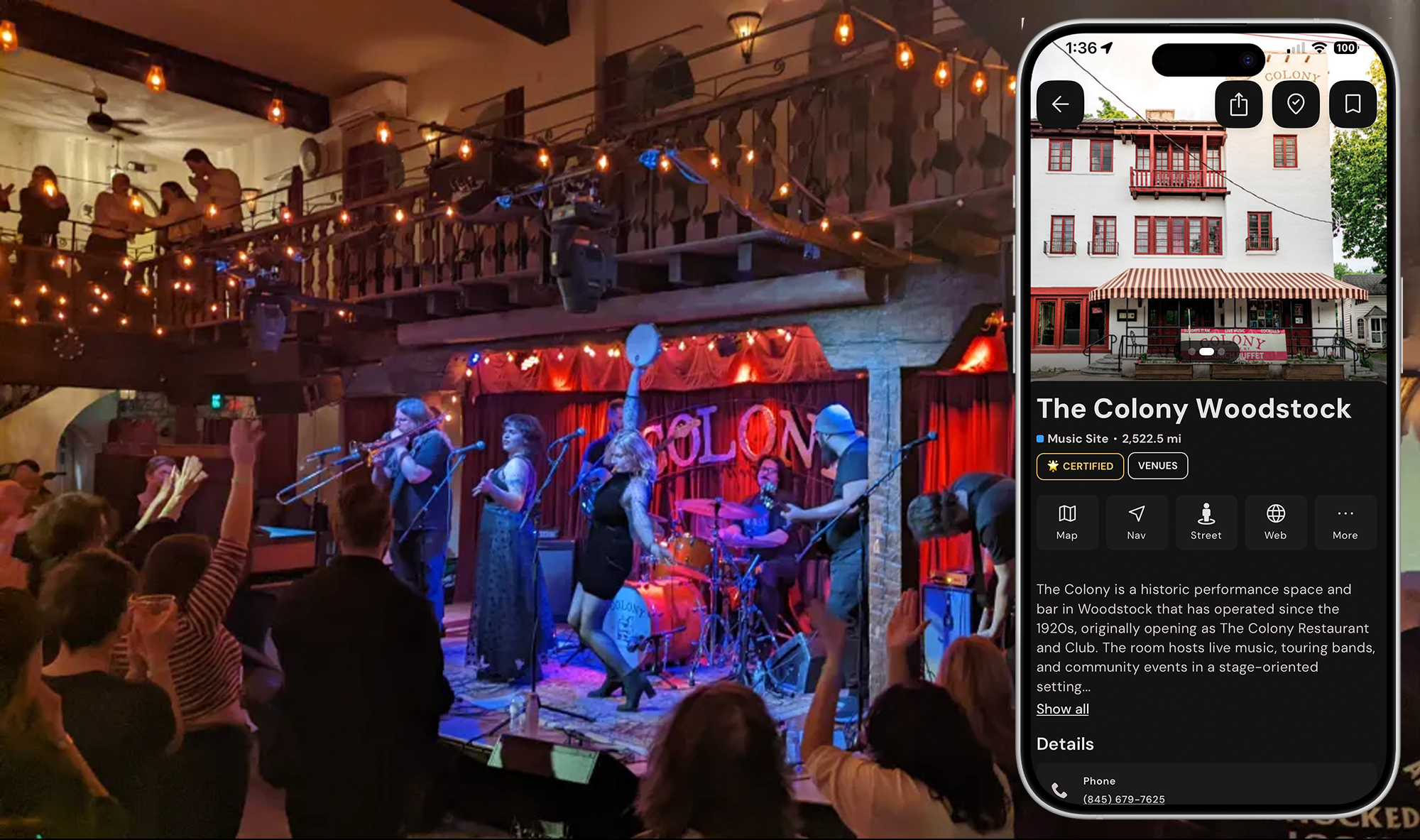
Colony Woodstock
When it opened in 1929, the Colony Hotel was the tallest building in town — a staggering three stories. Decades before Bob Dylan made Woodstock a music destination, the hotel’s great room was hosting big-band concerts.
Business flourished in the ’30s as tourists flocked to the Catskills, but the glory days faded as the U.S. entered World War II. The building sat largely dormant for the next 40 years until this century, when it’s been revived a few times as a spot for food, drinks, and live music.
The latest incarnation, Colony Woodstock, has made the local music community a priority with a weekly open mic, a rotating local showcase, an outdoor concert series in the warmer months, and a monthly Grateful Dead night. It’s small, welcoming, and fueled by local talent: the kind of place most folks traveling this way are hoping to find.
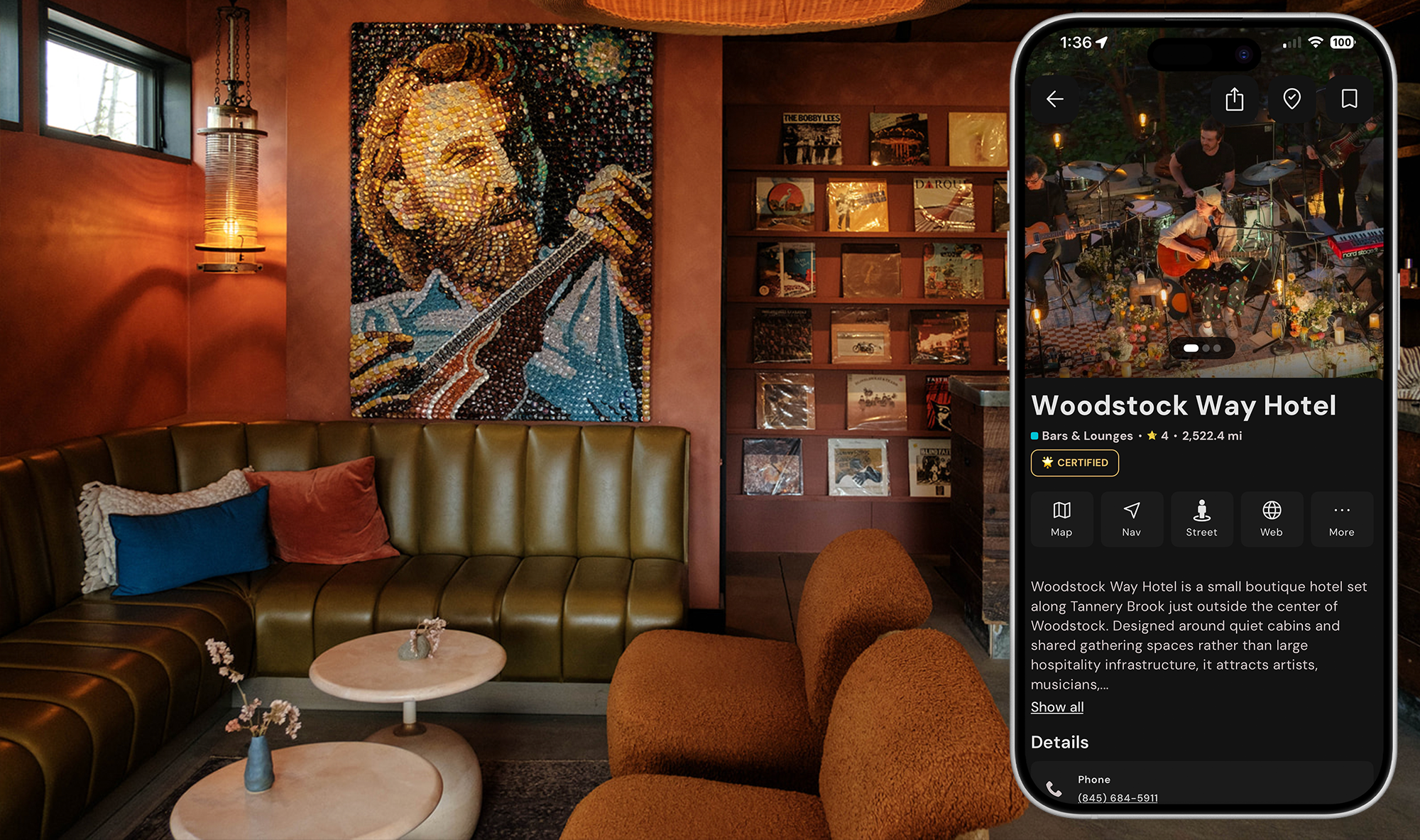
Woodstock Way Hotel
But what about hotel buildings that are also hotels? We got you. Woodstock Way Hotel knows you’re here for a bespoke, highly musical experience, and they’ve built the property around it. You’ll find a turntable in every room. Finally, a hotel that recognizes playing vinyl is as essential a need as ironing your shirt.
You don’t need to bring your records, though. Head down to the Tannery, the cozy communal space with a painting of Levon Helm playing mandolin hung proudly on the wall, and choose a few LPs to bring back upstairs.
It’s not unusual to see an outdoor concert set up beside Tannery Brook and its 15-foot waterfall. From there, you’re one block from the center of town and the Village Green, the spot for free performances, public markets, and at one time, frequent Dylan sightings.
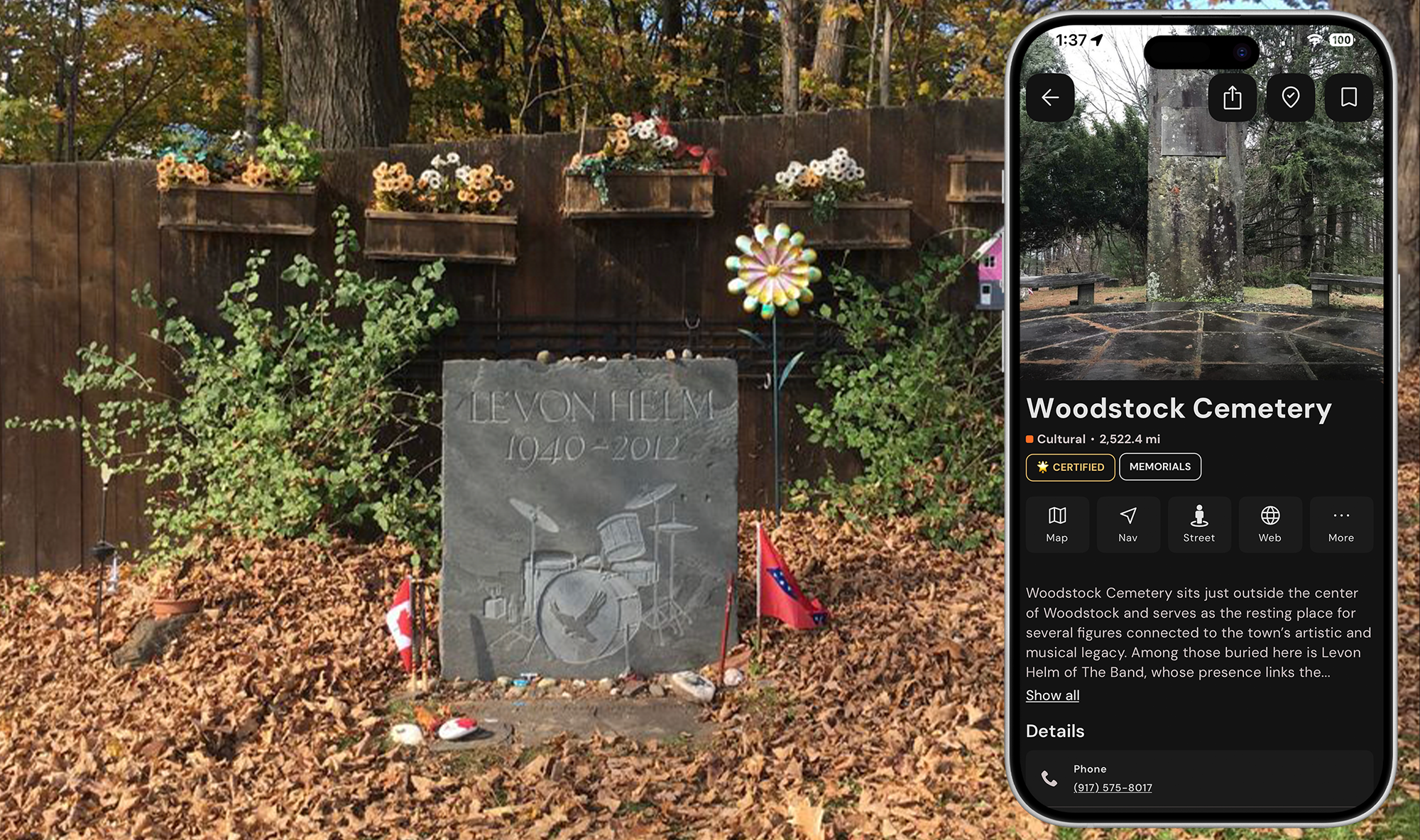
Woodstock Cemetery
Just outside the Village Green sits Woodstock Cemetery, the final resting place of Levon Helm and Rick Danko of The Band.
Danko was one of the group’s three lead singers. If you know “The Weight,” that’s him on the verse about Crazy Chester. Like Helm, he spent decades living in the Woodstock area and remained here until his death in 1999.
Unlike many musician gravesites, this isn’t a stop reserved for diehard fans. Plenty of Woodstock visitors wander through the cemetery whether or not they’ve studied The Basement Tapes. Sixty years since their arrival, The Band and Woodstock have come to define one another in parts great and small.
“We all had that hometown feeling about the area,” Helm once said. “The town took in the band and treated us like favorite sons.”
More Woodstock Spots
Woodstock Music Shop
Independent shop in the center of town selling guitars, gear, and
vinyl. It’s a low-key hub for the area’s musicians and collectors.
Big Pink
The modest house in nearby Saugerties, New York where Bob Dylan and The Band made the legendary Basement Tapes in 1967.
Village Green
The small park at the center of town that hosts concerts, festivals, and community gatherings throughout the year.
Radio Woodstock (WDST 100.1)
Independent station broadcasting since 1980, championing rock, roots, and local artists and hosting guest-DJ “Saturday Night Takeover” shows with musicians like Jenny Lewis, Angel Olsen, Allison Russell, Valerie June, Lucius, and Natalie Merchant.
Bread Alone Bakery
A Hudson Valley institution founded in 1983, known for artisan breads and strong coffee..
Tinker Street Tavern
A relaxed neighborhood bar known for open mics and small live shows.