
Memphis Magic: From Al Green’s church to Elvis’ suit store
Welcome to The Seeker.
As we prepare to launch Music Roadtrip—a free Travel App for Music Fans—we’re unveiling our first newsletter, highlighting America’s greatest music towns. These cities are swimming with incredible venues old and new; record stores, instrument shops and studios kept alive by passionate diehards; and unassuming spots where earth-shaking history occurred. And with Music Roadtrip in your pocket, you’ll be able to navigate them like never before—with customizable maps, curated itineraries, concert listings and more.
First up is Memphis, Tennessee—a town near and dear to our team. Let’s set the scene…
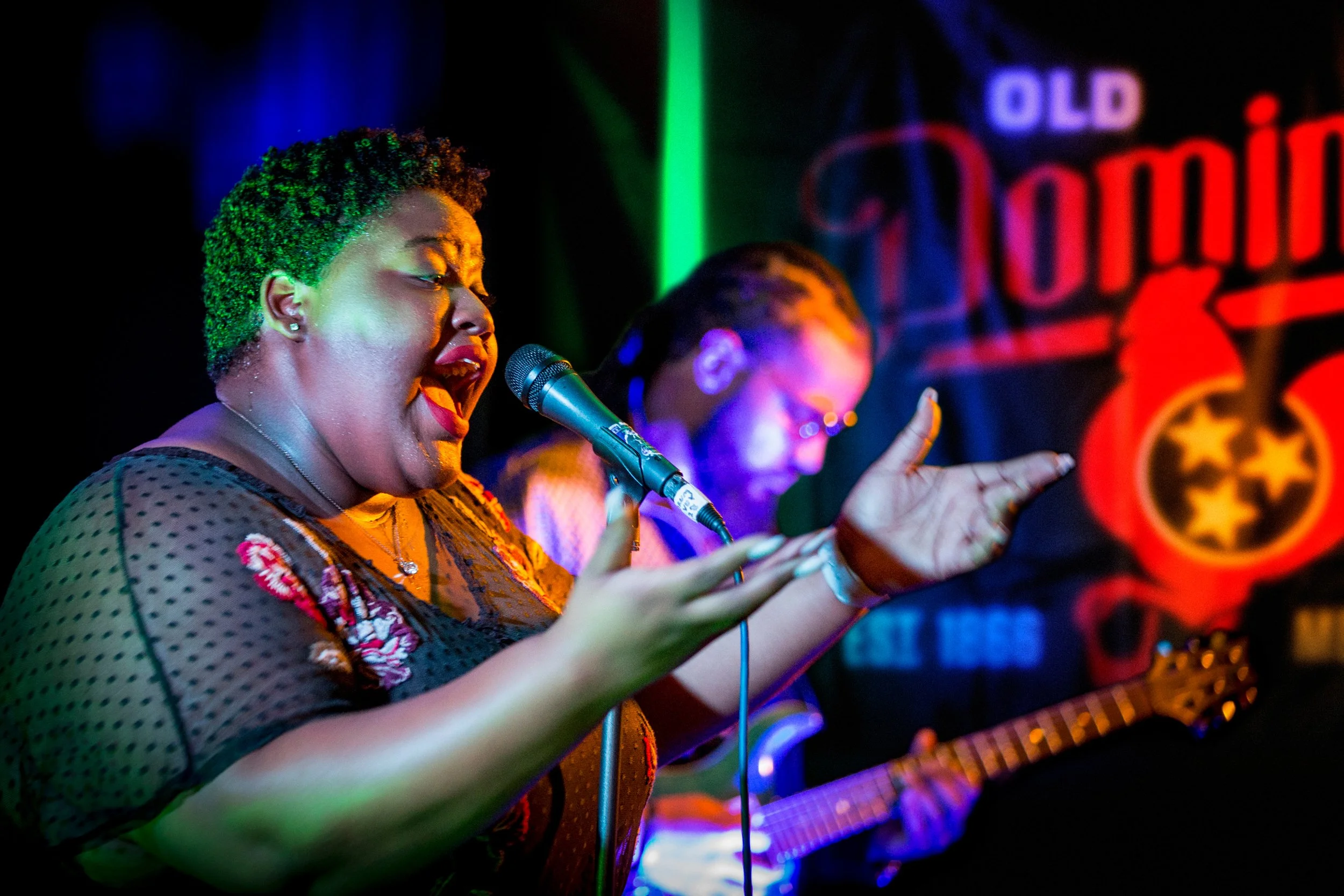
Tia Henderson performs at Old Dominick in Memphis (photo: Craig Thompson/Memphis Travel)
A few U.S. cities are inseparable from their revolutionary exports – the inventions that changed our world. Detroit gave us the automobile. San Francisco made the microchip. Pittsburgh forged steel.
You can put Memphis, Tennessee right alongside those cities. This is the town that defined rock and roll.
The thrilling new sounds of Elvis Presley, Jerry Lee Lewis and others – captured at Sun Studio in the 1950s – quickly caught fire in America, and as soon as those first vinyl shipments made their way across the Atlantic, that sound began to transform the globe. The youth were rewriting the rules, and rock and roll was here to stay.
There’s a reason it all started in Memphis. By the time Elvis showed up, the blues had been flourishing on Beale Street for nearly 50 years, from the trailblazing tunes of W.C. Handy to the electrified rhythm of B.B. King. And as rock conquered the world, Memphis’s players shaped the city’s musical traditions into a rich, stirring new sound: soul, exemplified by the likes of Otis Redding, Isaac Hayes and the Staple Singers.
But unlike the millions of copies sold of “Soul Man,” the true magic of Memphis can’t be duplicated. It’s why Presley and Hayes never left, why Al Green continues to give sermons on the south side, and how this town has continued to shape the sound of America, from Big Star and Three Six Mafia to Justin Timberlake and Glorilla.
Luckily for visitors, that magic works fast – and these Memphis spots have it in spades.
Al Green’s Full Gospel Tabernacle
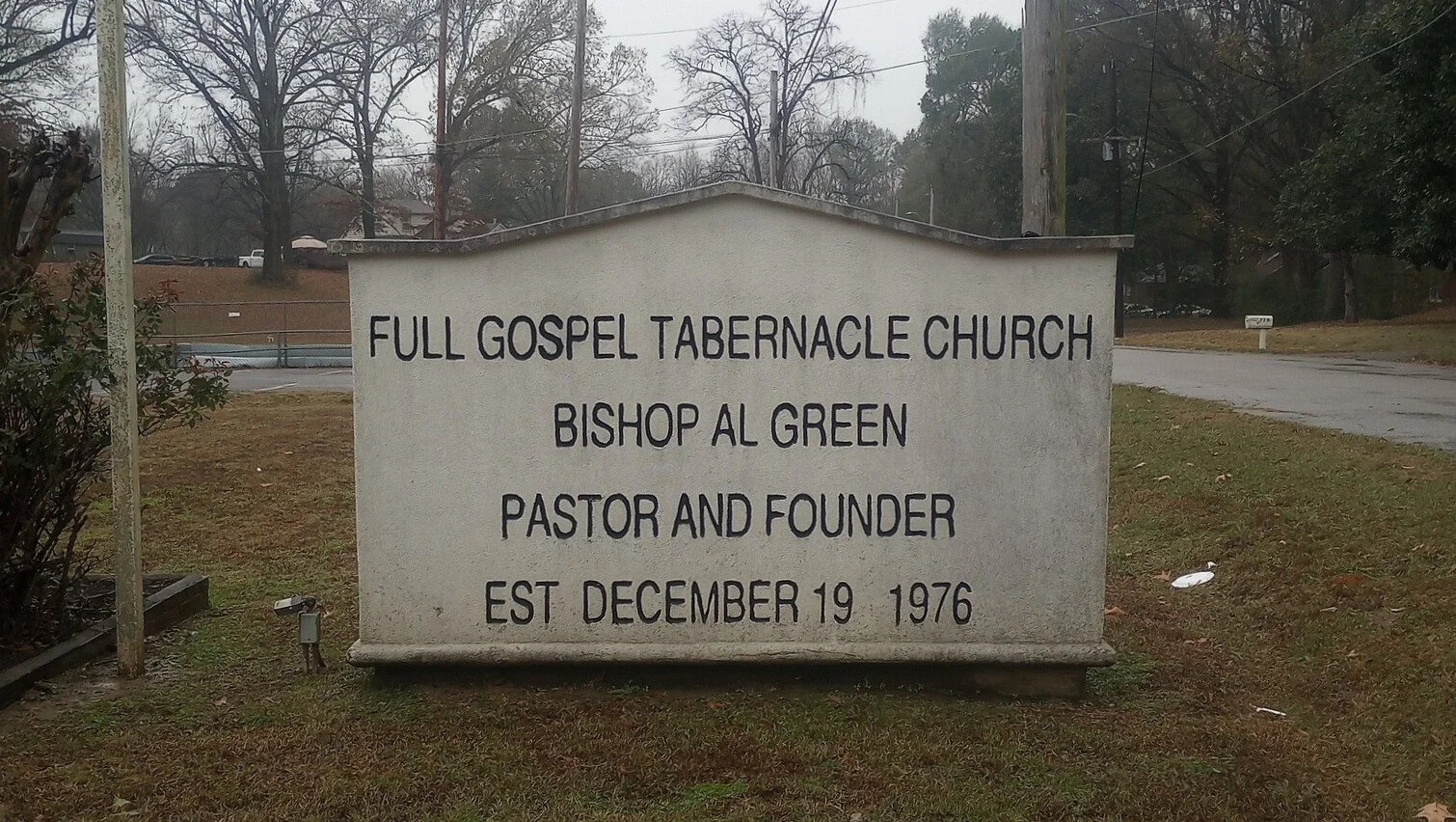
If you know your Memphis music, you’ve heard about the legendary church Al Green founded in town 50 years ago – where the soul great still delivers occasional sermons. But perhaps you’re wondering if it’s OK for a curious out-of-towner to attend a Sunday service during their visit. According to the man himself, it’s more than OK – it’s part of his mission.
“You might have come on your vacation,” he told The Commercial Appeal in 2016. “We get a lot of that. Well, we say while you’re here, why don’t we do a little bit of ‘Amazing Grace.’ It may help you along your way. I don’t take it as anything else but an opportunity. If God gives me this audience, I’ll preach the Word to them.”
50 years on, Green is still doing just that. Just last month, he was back behind the pulpit to lead worship and mark the church’s 49th anniversary (they’ll celebrate the big 5-0 this December). Even if you don’t see Green during your visit, Full Gospel Tabernacle is a testament to his unflagging faith, a window into the gospel roots that have shaped so much of Memphis’ music – and it may help you along your way.
Lansky Bros
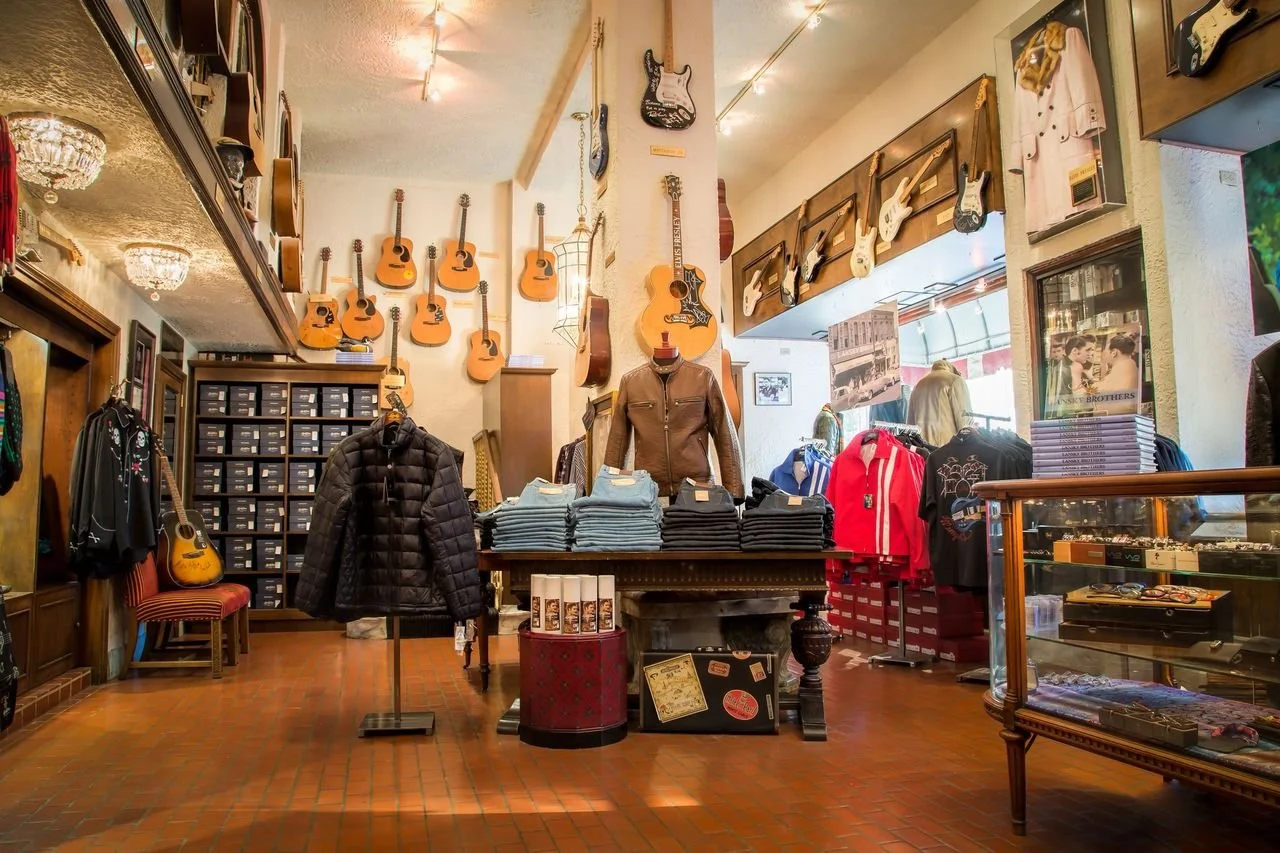
Lansky Bros. Photo courtesy of Rock Memphis Live
Take it from Hal Lansky: If you wear a Lansky Bros. suit to a job interview, you’re not going to be hired. Don’t wear it to apply for a loan, either.
However, “If you want to be the belle of the ball, or the coolest guy in the room? We’re your store.”
A young, unknown Elvis Presley recognized that right away. As legend has it, his face was practically pressed up against the store’s display window when Hal’s father, store founder Bernard Lansky, invited him in.
"Mr. Lansky,” Presley supposedly said, “I don't have any money, but one of these days I'm going to come in and buy you out". Mr. Lansky replied with what would become a famous family quip: "Don't buy me out. Just buy from me.”
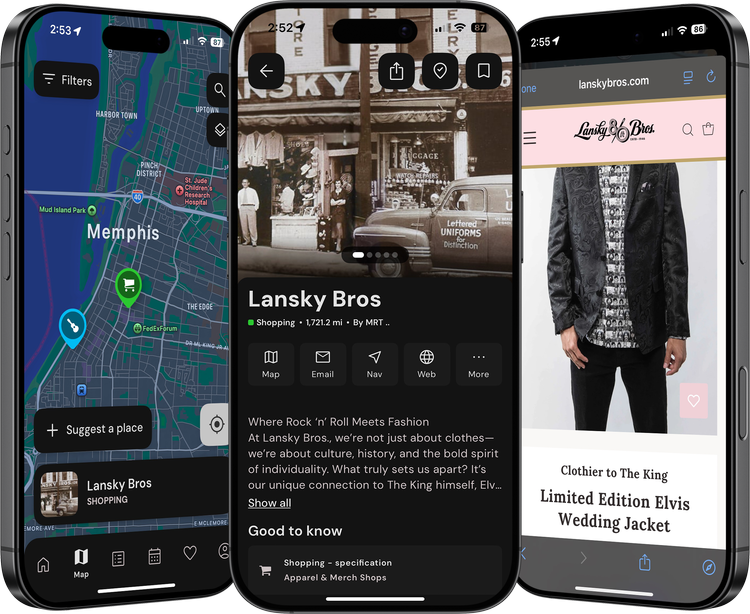
It was a deal. Presley wore countless Lansky outfits over the years — his pink and black outfit for senior prom; the plaid jacket he wore on his Ed Sullivan Show debut; and the white suit he was buried in at Graceland. Other famous customers included Isaac Hayes, Johnny Cash, Bobby Blue Bland and The Jacksons, all amplifying the Lansky legend.
This year, Lansky Bros. celebrates its 80th anniversary, now under the stewardship of Hal and his daughter, Julie Lansky. The store — located inside Memphis’ famed Peabody Hotel since the ‘80s — offers a mix of timeless fashions and modern spins on Elvis’ iconic looks.
And the stars continue to swing through. Hal reports Billy Bob Thornton — a customer since 1975 — came in few weeks ago.
"Our store is like a mini museum,” Julie says. "Not only are they our family heirlooms and our legacy, but everybody wants to see and touch what Elvis did…they want to come to Memphis and feel something.”
Royal Studios
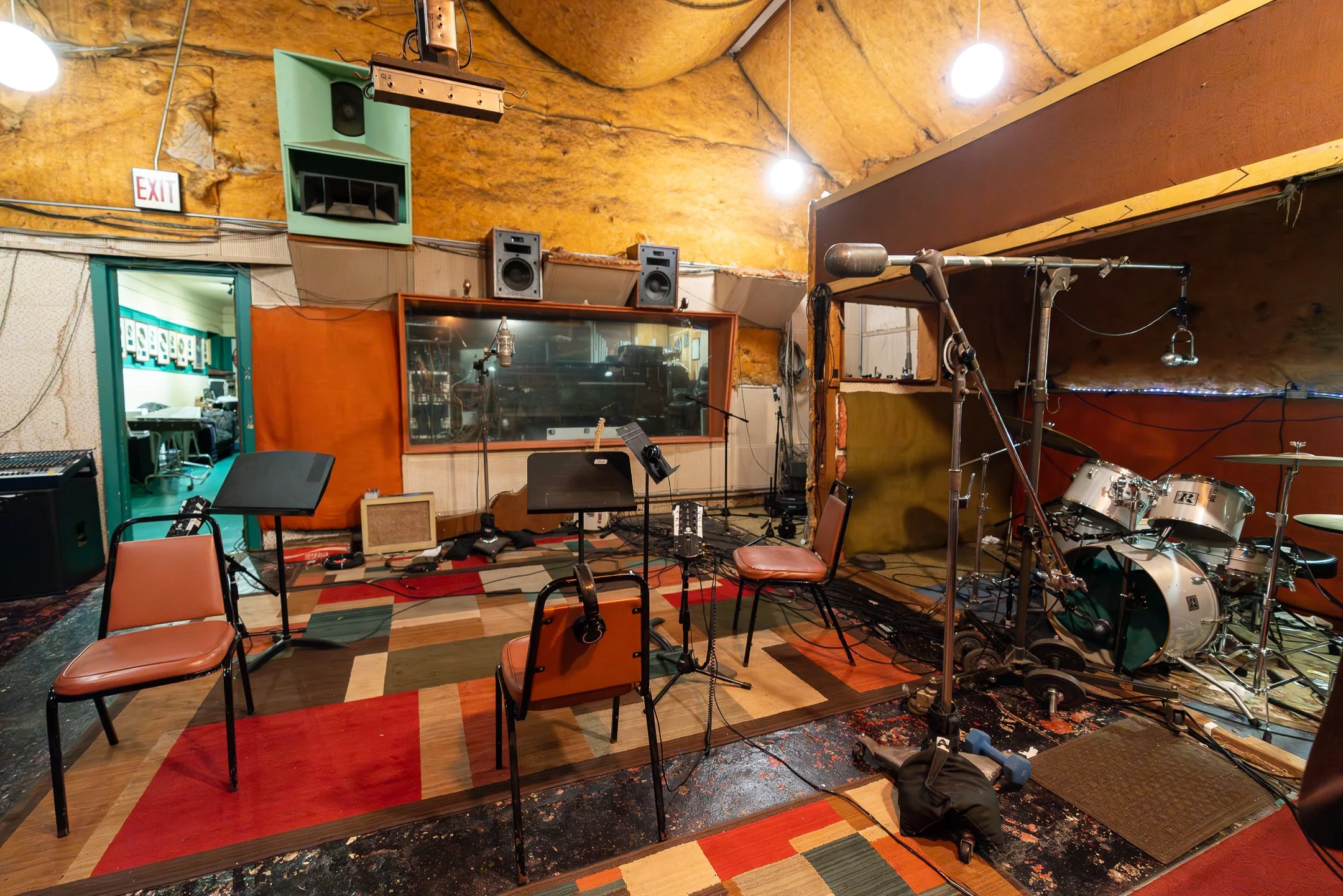
A former 1915 movie theater, Royal Studios became the home of Hi Records, where Willie Mitchell shaped the soul sound that launched Al Green. It’s still operational today. (Photo: Creation Studios/Memphis Tourism)
One of the oldest operating recording studios in the world, Royal Studios was founded in 1957 as the home base for Hi Records. But its legend truly began one year later, when bandleader and producer Willie Mitchell walked through its doors. Mitchell insisted on engineering his own recordings, and his techniques brought a new level of warmth, presence and power to the Memphis sound.
By 1970, he was made Vice President of Hi, and had carte blanche to redesign the studio and perfect its sound. At the same time, he’d taken a promising young singer named Al Green under his wing. One of the first songs they recorded in the revamped studio was “Let’s Stay Together,” which topped the pop charts and minted Green – now and forever – as one of the city’s brightest stars.
Royal has remained in operation to this day, and is now overseen by Mitchell’s grandson, Lawrence "Boo" Mitchell. Over the decades, they’ve welcomed a vast range of artists – from Keith Richards and Tom Jones to Wu-Tang Clan and John Mayer – all hoping a bit of the studio’s storied magic will rub off on them. More than 40 years after his grandfather produced “Let’s Stay Together,” Mitchell recorded Bruno Mars’ vocals for “Uptown Funk” with much of the same equipment.
Since it’s still a working studio, Royal isn’t open to the public without an appointment, but the photo op at its painted entryway—honoring Mitchell and other alums—is worth the trip for fans.
Shangri-La Records
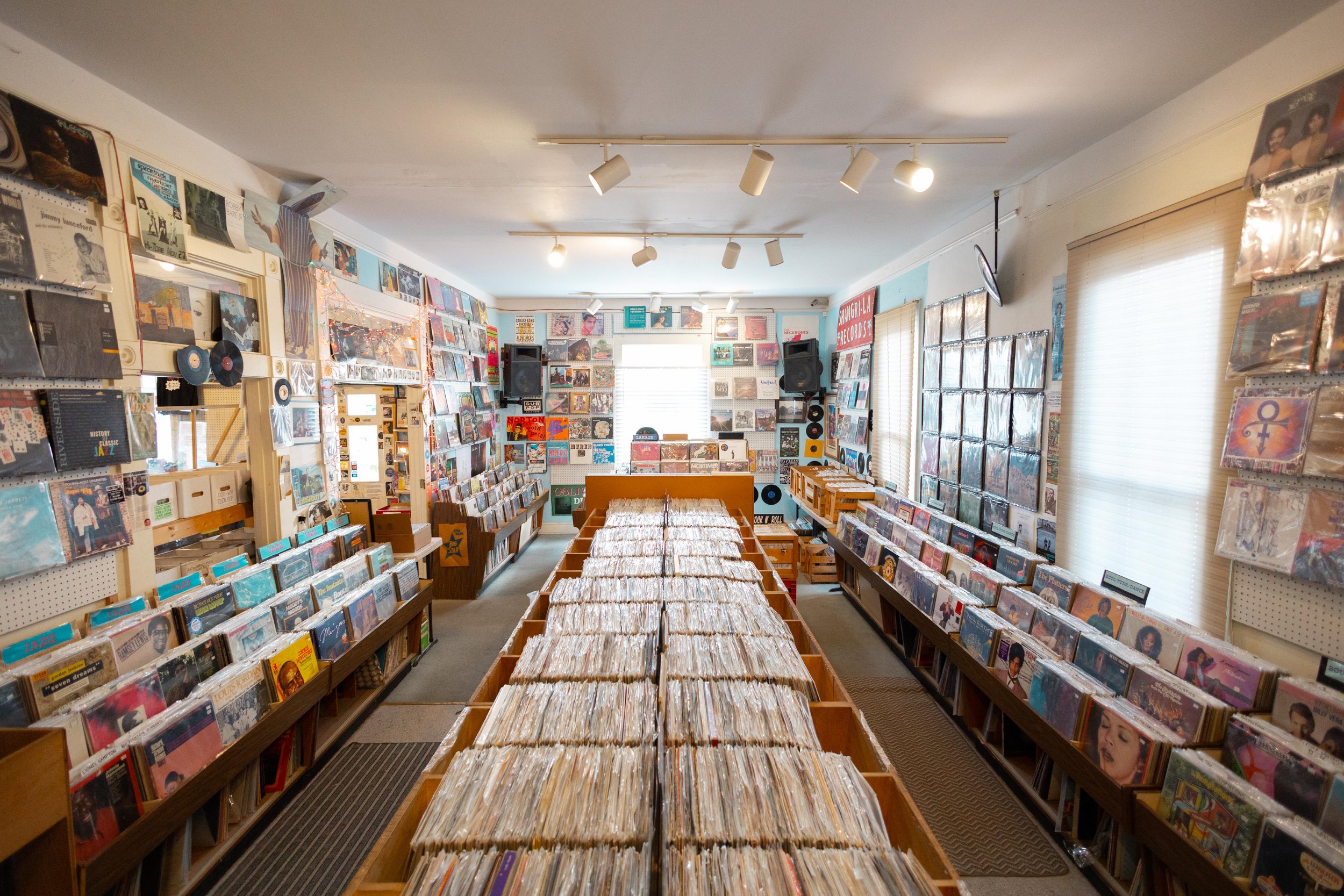
Shangri-La Records (photo: Logan Schaal)
No record store has an origin story quite like that of Shangri-La, a midtown fixture since 1988. The store’s first customers didn’t walk through the doors looking for used LPs — they climbed into sensory deprivation tanks with calming lights and sounds to receive a “brain tune-up,” in the words of founder Sherman Willmot.
“After a little while though, a single crate of records began what would become an avalanche of music and music connected items,” says store manager John Miller.
Little by little, the tunes took over. Today, Shangri-La Records is a one-stop shop for Memphis music, in addition to tens of thousands of LPs, 45s, CDs, DVDs and books from all over. It’s hosted hundreds of in-store and parking lot performances over the years by everyone from Ike Turner and Tony Joe White to Pavement and Guided By Voices. It even spun off into Shangri-La Projects, a label, publisher, and film studio centered on music and culture rooted in this place.
“Memphis music stands out because it is always original,” Miller says, “and made by artists who create their own style without regard for trends, fame, or fortune.”
Stax Museum of American Soul Music

Stax Museum of American Soul Music (photo: Sean Fisher/Memphis Travel)
To truly know Memphis, you need to know Stax. Setting up its studio and headquarters in a former movie theater in 1960, Stax Records became the home of a southern soul sound that felt different from anything else on the radio.
Thirty years later, its history-making building was rubble. It had been sold to a church in the label’s waning years, and was demolished in 1989. Luckily, a group of Memphians and music lovers banded together to revive that history, brick-by-brick.
The Stax Museum of American Soul Music — a loving replica of the label’s headquarters — opened in 2003 on the building’s original site. The museum tells the Stax story in the crucial context of the civil rights movement, and the stark realities of segregation. Guests are able to walk through the roots and the reign of the Stax sound, from a reassembled Mississippi Delta Church, to a painstaking recreation of Stax’s Studio A, to a “Wall of Sound” lined floor-to-ceiling with every release in the label’s history.
While the Stax Museum is devoted to preserving the label’s past, it is part of the Soulsville Foundation, an organization focused on the future. It also runs the Stax Music Academy, which offers free music education, mentoring, and performance opportunities for Memphis youth, and the Soulsville Charter School, a tuition-free, college-preparatory public school built around a music-rich curriculum.
As Soulsville CEO Pat Mitchell Worley points out, “The Stax story speaks to youth development before the words were commonplace.”
“Young people hung out at the Satellite Record Store attached to Stax Records. They sampled the new music, and some of them showcased their talent to get in the door at Stax. Isaac Hayes, David Porter, Booker T, Steve Cropper are some of names known in the Stax story, but people often forget they were teens and young adults when they started their careers.”
Crosstown Concourse and Crosstown Arts
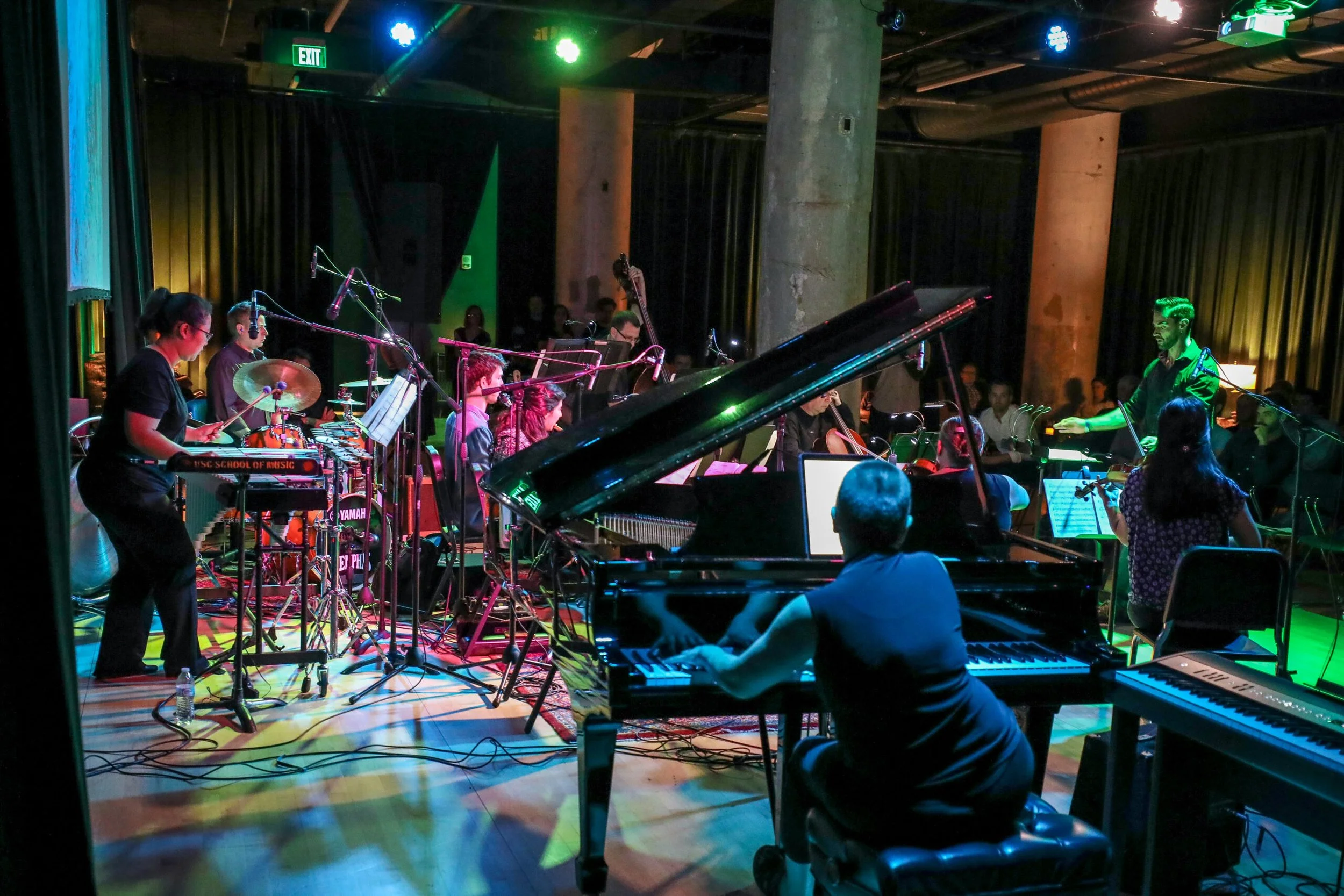
The Green Room (photo courtesy of Crosstown Arts)
99 years ago, a 14-story tower opened in Memphis as a massive retail, logistics and shipping site for Sears—the Amazon of its day. But when the mail-order catalog folded in 1993, so did the building. Thanks to a group of anonymous investors, it was saved and transformed into a “vertical village”—packed with restaurants, retail and residences—in 2017.
But more crucially for music lovers, Crosstown Concourse serves as a one-of-kind clubhouse for Memphis music. It’s home to the non-profit Crosstown Arts, which—in addition to its galleries, studios and shared workspaces for artists—recognizes the need for “accessible and supportive performance spaces for both professional and up-and-coming musicians,” says Executive Director Stacy Wright.
Crosstown Arts operates two music venues in the Concourse: the 150-capacity Green Room, and the Crosstown Arts Theater (415-900 capacity depending on layout).
They’re also inspired by their many “music-centric” neighbors in the building. There’s the Memphis Listening Lab, an audiophiles’ haven and host to listening sessions, discussions and live performance. Grammy-winning producer/engineer/mixer Matt Ross-Spang runs the Southern Grooves studio out of the former Sears cafeteria. Freeform radio station WYXR also broadcasts from the bulding,
And starting next year, Crosstown Concourse will also be neighbors with Satellite Music Hall, a state-of-the-art, 1,300-capacity venue currently being built from the ground up by Live Nation. It’s set to open in the fall of 2026, bringing even more music lovers to the block – and the folks at Crosstown Arts can’t wait.
“From large-scale live performances to surprise musical ‘pop-up’ moments, there is something for everyone,” Wright says.
Music Roadtrip
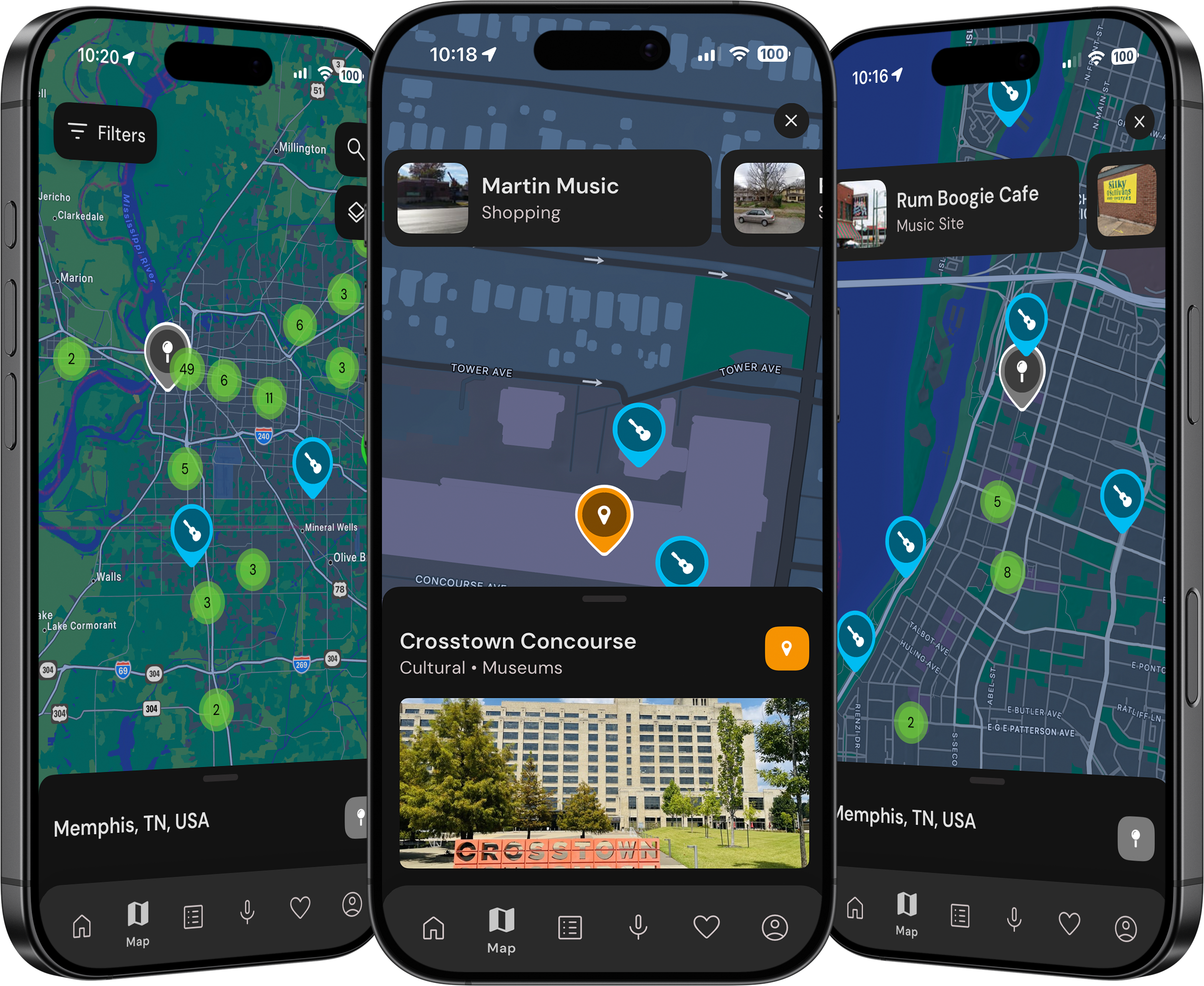
Music Roadtrip—a Travel App for Music Fans—is coming soon. Follow us on Instagram, Facebook, X and LinkedIn to discover your new favorite spot. Head to MusicRoadtrip.com to learn more.
