
8 music museums worth the trip
Howdy, Seekers!
Hope you had a swell weekend. It was a great one to be at a ballpark: Jay-Z celebrated 30 years in the game with three nights at Yankee Stadium; Noah Kahan returned to Fenway Park for a record-breaking four-night run; and Chicago blues legend Buddy Guy opened for John Mulaney as he became the first comedian to headline Wrigley Field.
But you know what? We’re tired of wondering aloud what you got up to. We want to be in the loop.
Send us your snapshots from the road, the stands, the mosh pit, wherever your musical travels take you. We want to see how you’re using the Music Roadtrip app to fine-tune your adventures, and we’ll feature some of our favorite submissions right here in The Seeker each week.
Step one, of course, is downloading the Music Roadtrip app. It’s a live guide to the best music spots — from venues and festivals to record shops, museums, and studios — right in your pocket.
It’s available for free download on Apple’s App Store and Google Play.
Now, on to this week’s issue — and it’s a special one. We’ve combed the country for the best music museums, with an eye toward places offering cool, limited-time exhibits and rare artifacts. Then we narrowed the field to our Top 8, MySpace style. Hope you enjoy...
(Bob Delevante for the Country Music Hall of Fame and Museum)
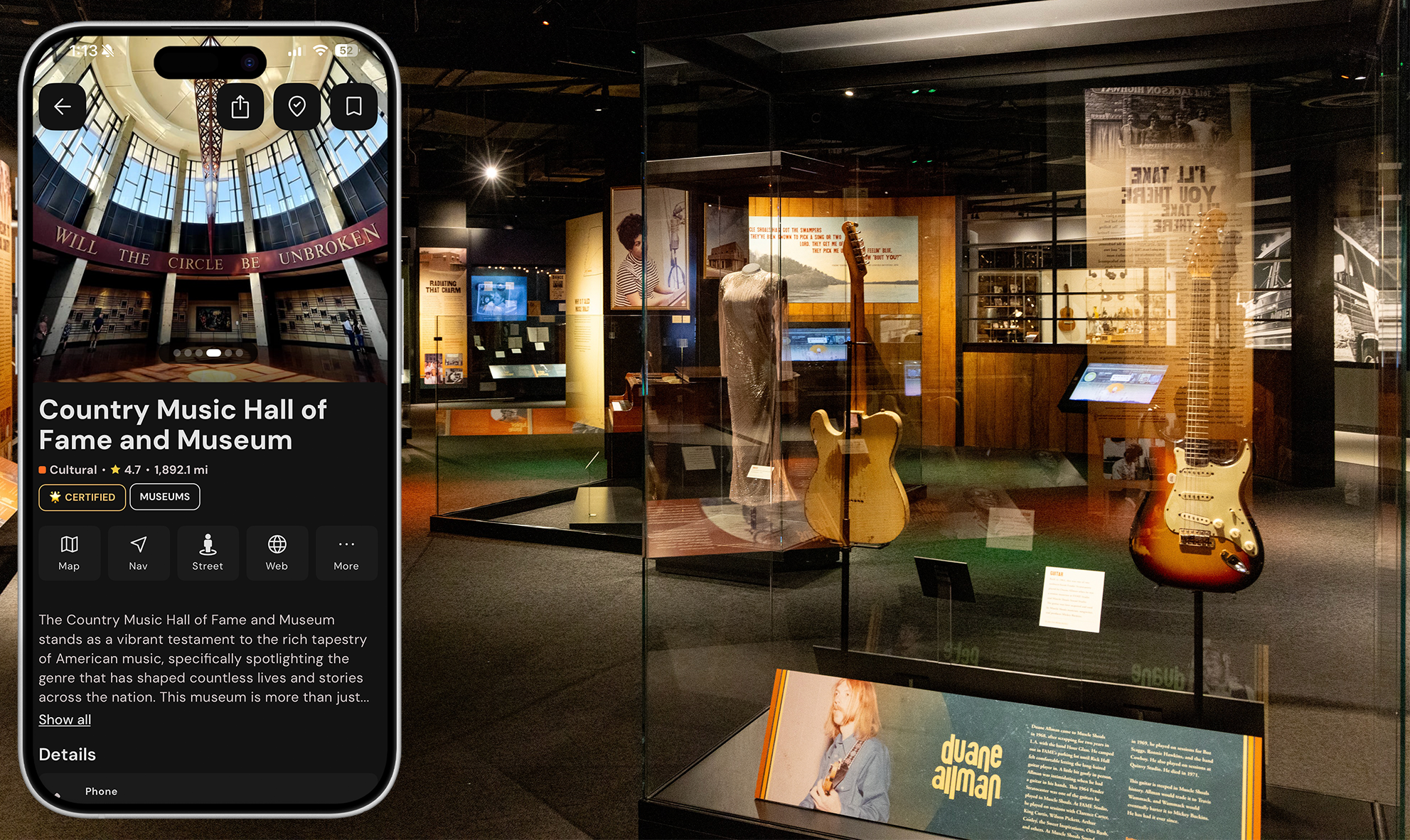
‘Muscle Shoals: Low Rhythm Rising’ at the Country Music Hall of Fame and Museum
(Nashville, TN)
One great music town salutes another with the Country Music Hall of Fame and Museum’s special exhibit Muscle Shoals: Low Rhythm Rising.
The permanent galleries at the museum are a shrine to country music’s greats. But the rotating exhibits often widen the frame, showing how the genre has mingled and traded notes with other sounds and regions. Before Muscle Shoals moved in, this space spent had a three-year run celebrating California country-rock with the exhibit Western Edge.
This time, the road leads to a quiet Alabama community that became a global recording powerhouse in the 1960s and ’70s. At FAME Recording Studio and Muscle Shoals Sound Studio, Black and white musicians built a homemade sound together at a time when segregation still shaped daily life across the South.
Duane Allman’s electric guitar, Wilson Pickett’s jumpsuit, and a baby grand piano played by Aretha Franklin are among the treasures you’ll find.
It goes without saying that a trip down to Muscle Shoals — and a stop at FAME Studios — is well worth the pilgrimage. But if you’re only able to swing through Nashville, then (to paraphrase the Staple Singers) Low Rhythm Rising will take you there.
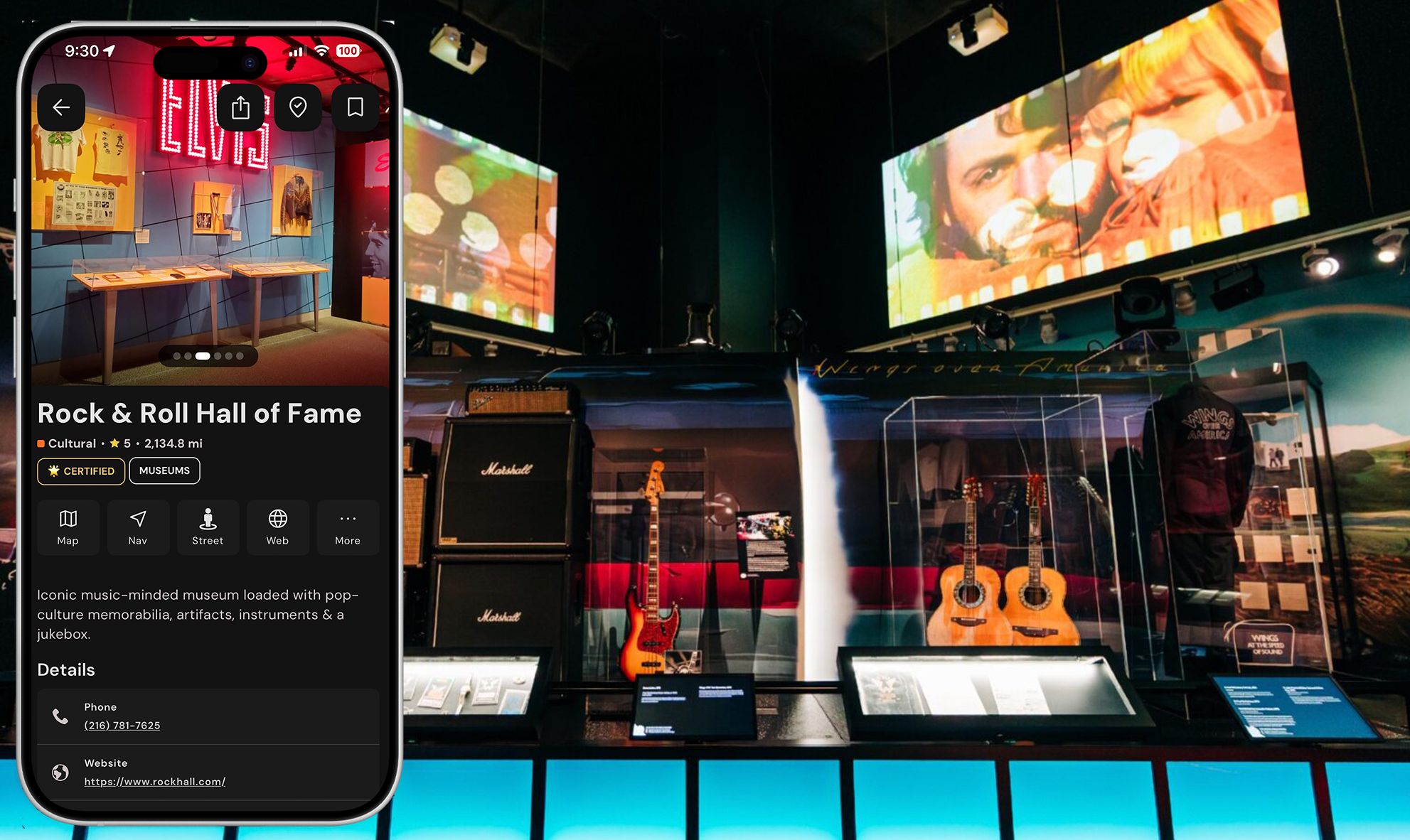
‘Paul McCartney and Wings’ at the Rock & Roll Hall of Fame
(Cleveland, OH)
With his new album The Boys of Dungeon Lane tapping into childhood memories, Paul McCartney has been doing a lot of reminiscing lately.
That continues with his new exhibit at the Rock Hall, but it doesn’t focus on his Liverpool youth, or his time in the biggest band in the world. It’s about what he did next.
Paul McCartney and Wings traces the decade after the Beatles split, when McCartney formed Wings with his wife Linda and set about reinventing himself in public. The exhibit follows that arc from his self-titled 1970 solo debut through the band’s rise and eventual dissolution in 1981.
The Rock Hall says it has gathered the largest collection of artifacts from McCartney’s personal archive ever made accessible to the public, plus contributions from Wings members and associates. Items on display include McCartney’s Gibson Firebird III, the “Helen Wheels” Lucite guitar, George Martin’s handwritten scores for “Live and Let Die” and “Uncle Albert,” stage-worn suits and kaftans, album-art mock-ups, Wings Over America tour pieces, previously unseen photography by Linda McCartney and others, and even a recreation of the McCartneys’ kitchen at High Park Farm in Scotland.
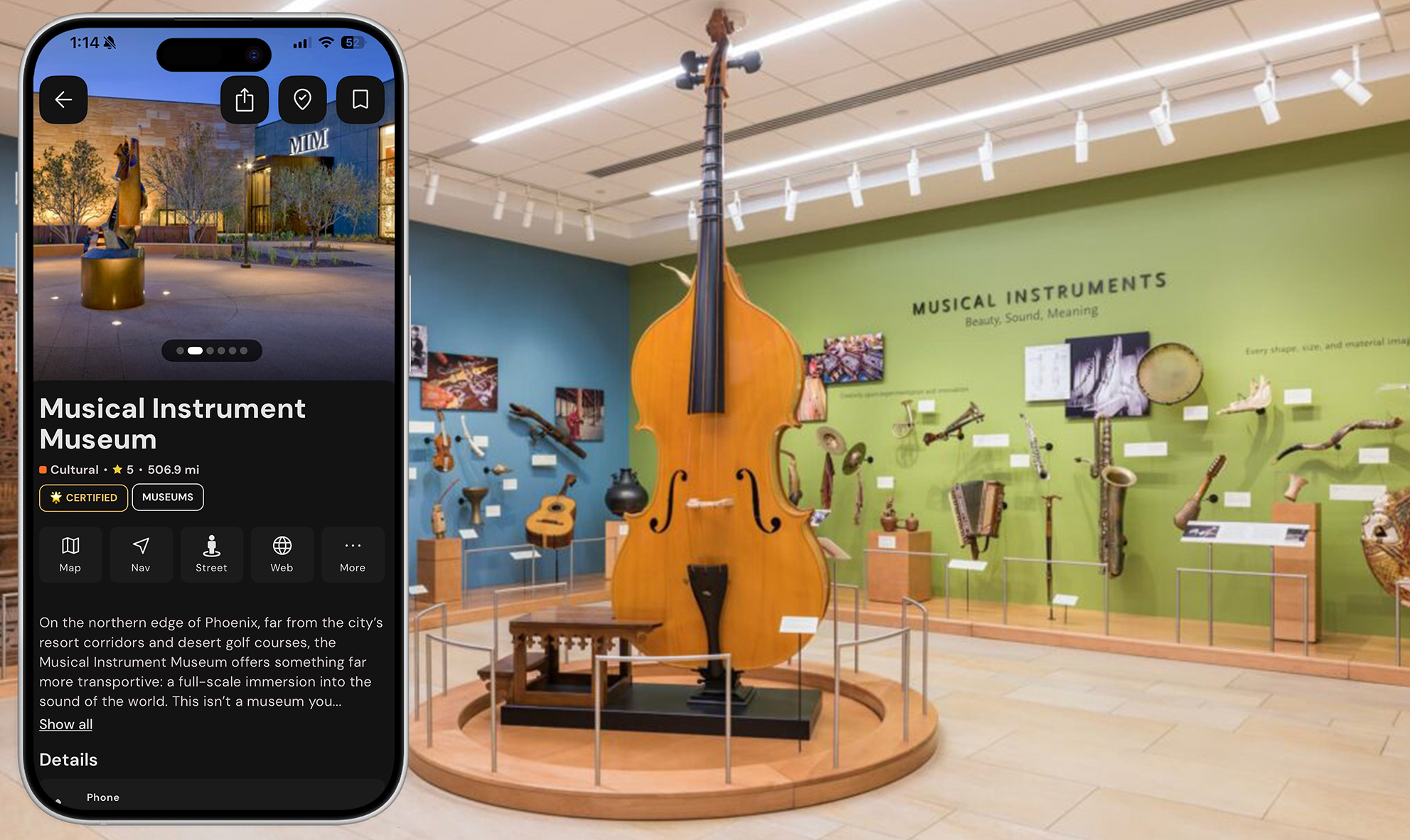
Musical Instrument Museum
(Phoenix, AZ)
You could form one heck of a band from the Musical Instrument Museum collection. Picture Prince on his purple grand piano, Elvis Presley and Johnny Cash providing acoustic rhythm for Ravi Shankar on sitar, and Duke Ellington leading from the bandstand.
MIM holds more than 7,500 instruments from more than 200 countries and territories, with more than 4,200 on display. The galleries are organized geographically, and headphones automatically cue up audio and video as you approach many displays — key for a museum where the sounds are as crucial as the sights.
The current special exhibit, The Magical Flute: Beauty, Enchantment, and Power, runs through September 13, 2026.
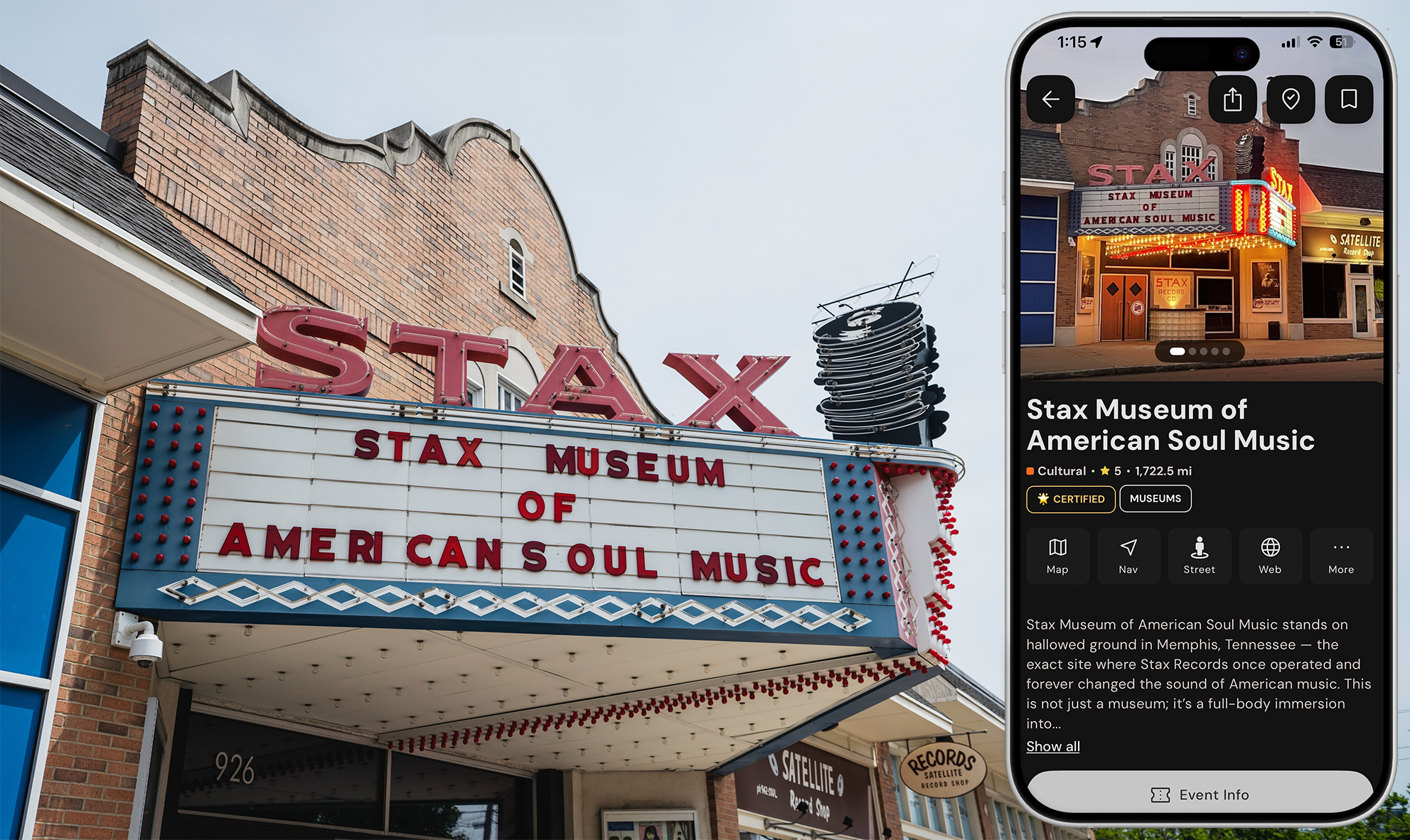
Stax Museum of American Soul Music
(Memphis, TN)
The Stax Museum of American Soul Music stands on the original South Memphis site of Stax Records, the label that helped define Southern soul from inside a converted movie theater. The original building didn’t survive — it was demolished in 1989, after the label’s collapse and the property’s sale — but the story did. In 2003, the museum opened as a careful reconstruction on the same ground.
That story is closely tied to Memphis. Stax rose during the civil rights era in a segregated city, where Black and white musicians collaborated to shape Southern soul. The museum traces this history from its roots through its peak, with exhibits including a reassembled Mississippi Delta church, a recreation of Studio A, and the “Wall of Sound,” featuring every single and album released by the label.
Oh, and Isaac Hayes’ custom 1972 Cadillac Eldorado, trimmed in gold, of course.
The current limited-time exhibit, Blues Power! Celebrating the Legacy of Albert King, adds another Memphis heavyweight to the mix, spotlighting the left-handed blues giant whose guitar tone helped shape Stax and just about every blues-rock player who came after him.
GRAMMY Museum Mississippi
(Cleveland, MS)
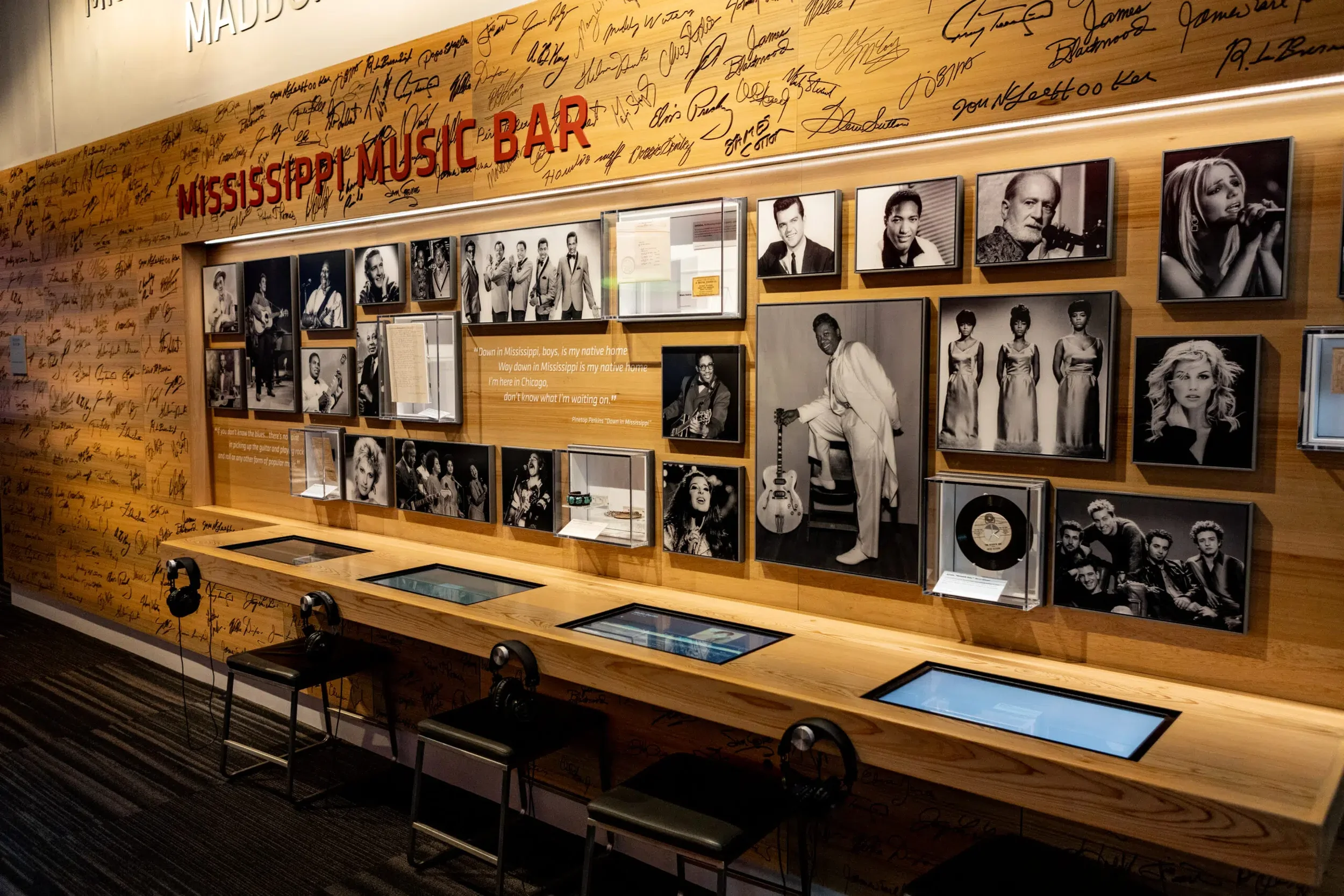
GRAMMY Museum Mississippi sits in the heart of the Delta, within easy road-trip distance of Clarksdale, Indianola, Dockery Farms, and Highway 61. Opened in 2016 as the second Grammy Museum in the world, it brings the big-awards treatment to one of the country’s deepest music regions.
Its exhibitions showcase Grammy history with a strong Mississippi focus. There’s a “History of the Grammy Awards” timeline, a Mississippi Gallery, a surround-sound theater for great Grammy performances, iconic instruments, and hands-on songwriting and production pods.
The current temporary exhibit, The Killer, The Preacher and the Cowboy, spotlights three famous cousins with very different musical legacies: Jerry Lee Lewis, Jimmy Swaggart, and Mickey Gilley.
The Allman Brothers Band Museum at the Big House
(Macon, GA)
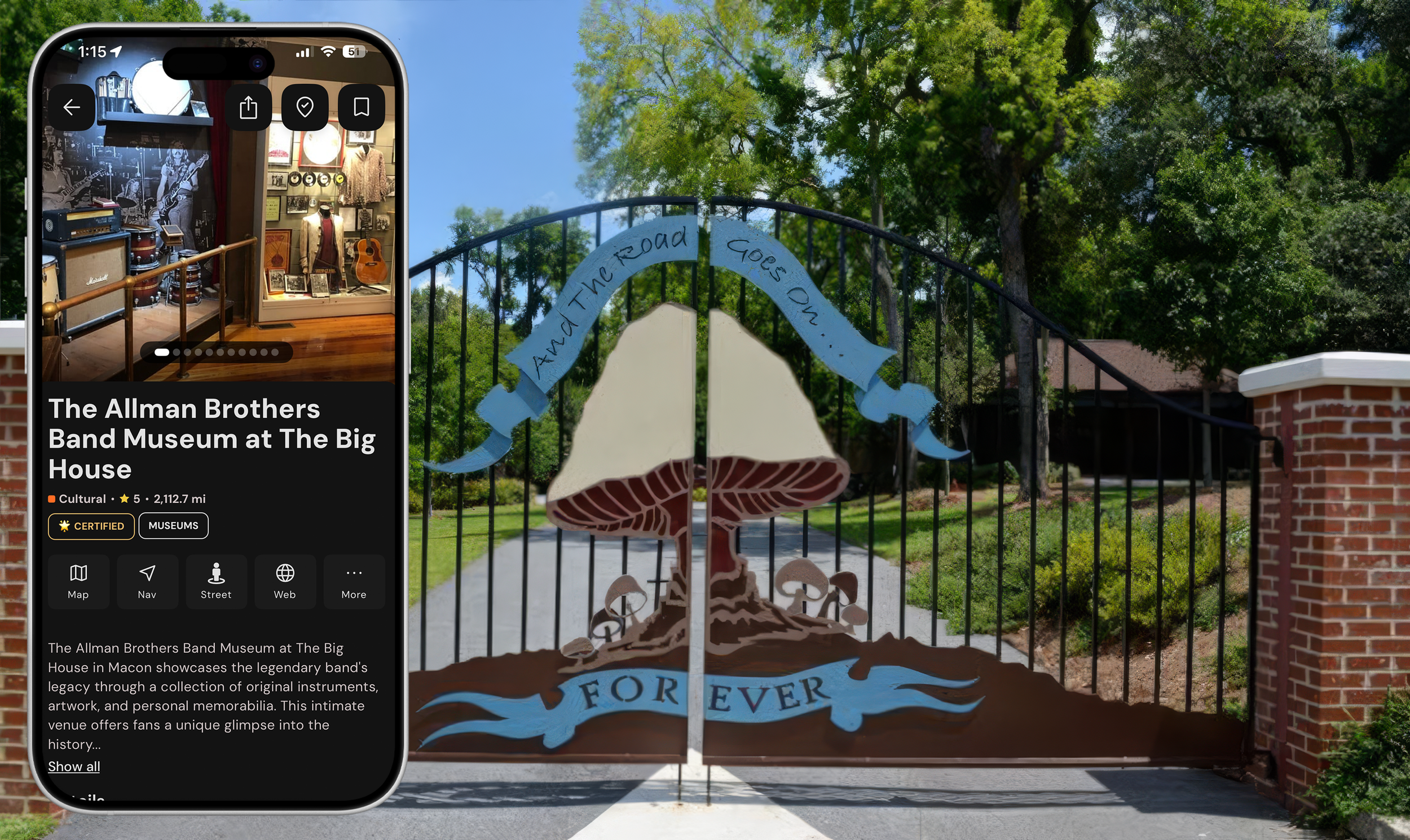
A well-crafted museum exhibit can feel “lived-in,” but The Big House literally was.
From 1970 to 1973, the Tudor-style house on Vineville Avenue was home base for the Allman Brothers Band, their families, friends, roadies, and extended orbit.
Today, The Big House Museum preserves that history with instruments, clothing, photos, posters, gold records, handwritten lyrics, and other Allman Brothers artifacts. But the real draw is stepping into the house itself: the living room, the music room, Duane Allman’s bedroom, the kitchen where songs and plans were brought to a boil.
For maximum effect, make this stop part of a larger Macon music loop: Capricorn Sound Studios, H&H Restaurant, Grant’s Lounge, and the Otis Redding Center for the Arts. The road might not quite “go on forever,” but it’ll take you a good long while.
‘Beats + Rhymes’ at the Museum of Pop Culture
(Seattle, WA)
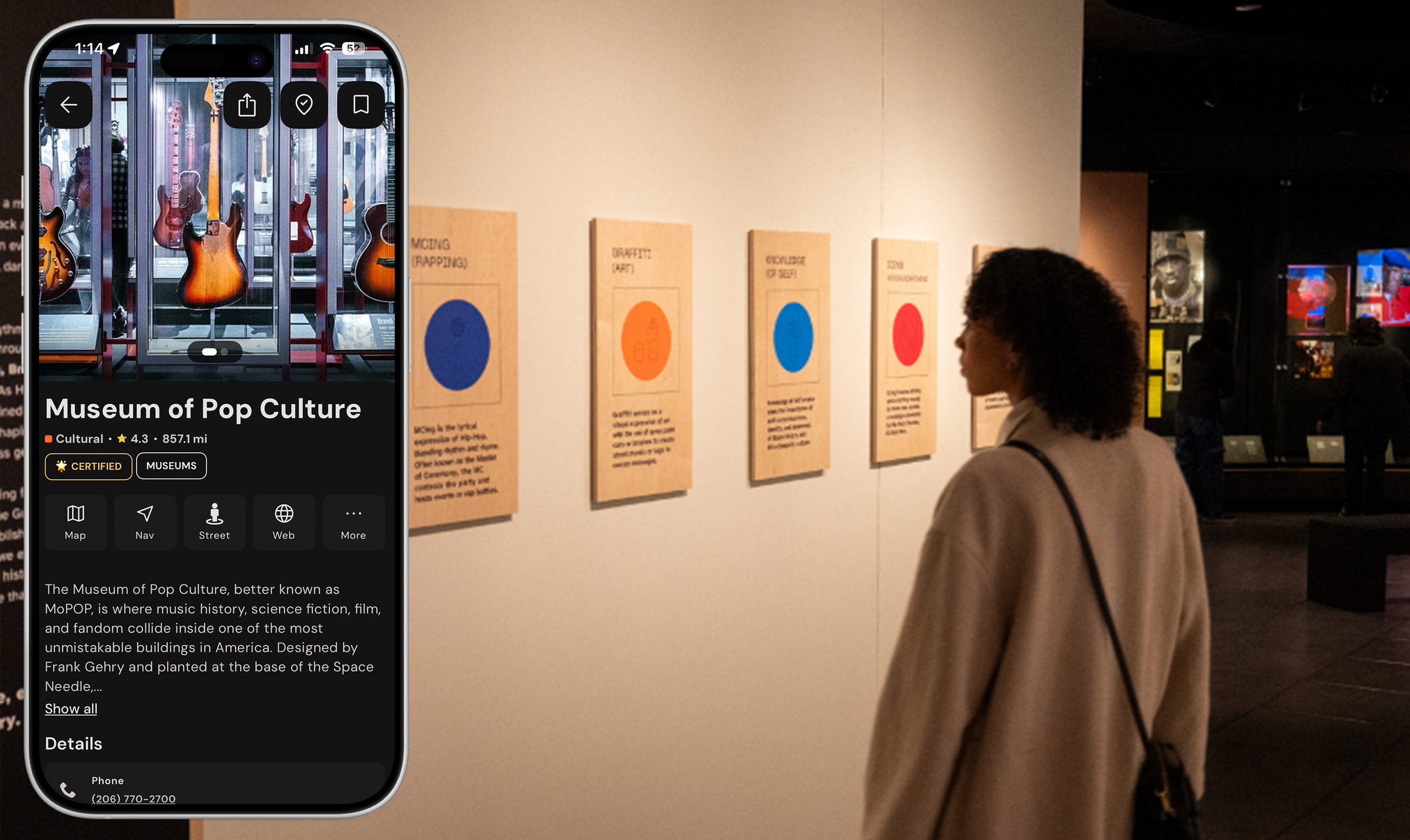
MOPOP opened in 2000 as the Experience Music Project, with deep roots in Seattle music, Jimi Hendrix, and founder Paul Allen’s guitar obsession. Twenty-five years later, the Frank Gehry-designed museum has grown into a pop-culture vault with more than 80,000 artifacts, less than 1% of which can be displayed at any given time.
Its current exhibit Beats + Rhymes: A Collective Narrative of Hip-Hop draws from that deep archive, exploring hip-hop’s first three decades, from 1970 to 2000, through five pillars: MCing, breakdancing, DJing, graffiti, and knowledge.
Artifacts include spray-paint cans once owned by Lady Pink, handwritten material from Tupac Shakur, a vintage issue of Rap Pages, promotional portraits of MC Lyte and Nikki D, a jacket worn by Missy Elliott in Janet Jackson’s “Son of a Gun” video, Chuck D’s denim jacket, and album-art material tied to Nas.
The Museum at Bethel Woods
(Bethel, NY)
Plenty of museums can show you Woodstock artifacts. At Bethel Woods, you can stand on the same hill, breathe the same Catskills air, and picture the morning Jimi Hendrix gave his revolutionary take on “The Star-Spangled Banner.”
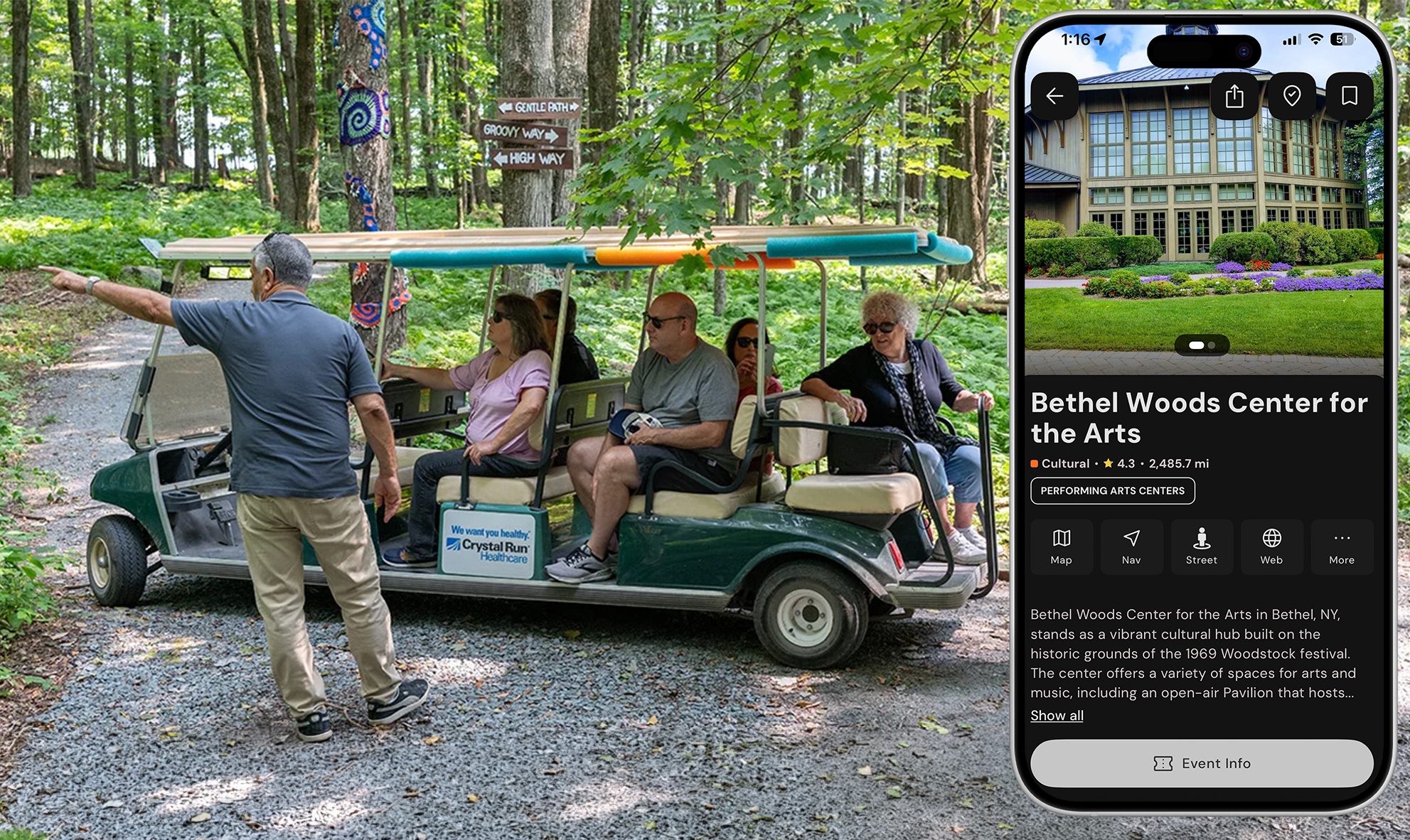
Located at the historic site of the 1969 Woodstock festival, the Museum at Bethel Woods explores the music, politics, fashion, art, and social upheaval of the 1960s, with Woodstock as its muddy centerpiece.
The main exhibit includes films, interactive displays, artifacts, photographs, and first-person stories from the era. But for rock history geeks like you and me, the real draw is outside, where tours of the preserved grounds take visitors through the festival field, the Bindy Bazaar, the Free Kitchen, the Art Fence, and other pieces of the original site.
There’s also a self-guided augmented-reality tour, narrated by Nick and Bobbi Ercoline — the couple wrapped in a blanket on the cover of the original Woodstock film soundtrack album.
