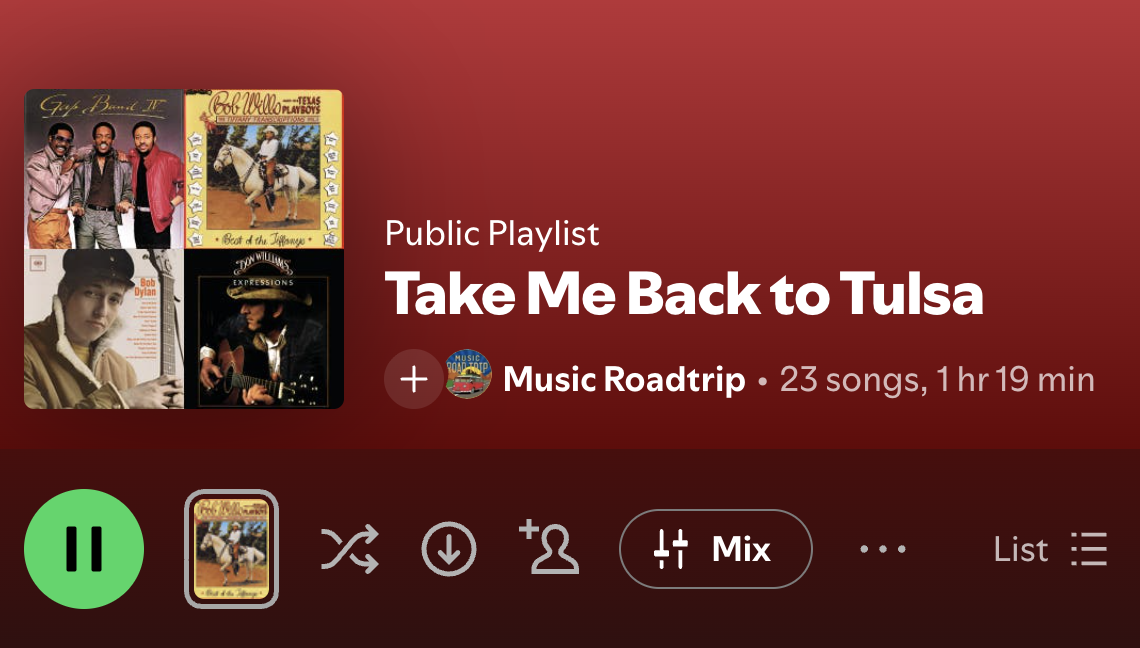
Tulsa Time: Cain’s, Leon, Woody, Dylan and The Merc
Greetings, Seeker readers!
Happy first day of Bonnaroo! We’re sending positive, cool (and hopefully dry) vibes if you’re heading out to Manchester, Tennessee.
That reminds us: we just dropped our July festival roundup, so take a peek if your summer calendar still has room for another road trip.
And wherever the season takes you, bring the Music Roadtrip app along. It’s a free guide to the venues, record stores, museums, landmarks, and hidden corners that really bring a city to life. It’s available for free download on Apple’s App Store and Google Play. Also, drop us a line at editor@musicroadtrip.com with any tips, venue additions for the app, or suggestions for towns for The Seeker to cover.
With that out of the way, let’s drop into an essential music town — one that has western swing, R&B, Red Dirt, and a couple of the greatest songwriters in history all wrapped up in its legend.
Tulsa, Oklahoma
This week, we’re digging into Tulsa’s rich and distinctly American musical legacy. And we’re not the only ones: AMERICANAFEST just announced that Tulsa will be its Spotlight City at this year’s festival, taking place September 15-19 in Nashville, Tennessee.
It’s hard to imagine a more deserving town, especially after hearing it summed up by Meg Gould, Executive Director of the Tulsa Office of Film, Music, Arts & Culture:
“Music is central to Tulsa’s identity,” she tells The Seeker, “and the city’s vibrant, thriving scene allows the opportunity to see an artist at every stage of their career: from up-and-comer at intimate venues like Mercury Lounge or The Colony, to established performer at the venerable Cain’s Ballroom, to superstar at Tulsa’s flagship arena, the BOK Center. The Church Studio, Woody Guthrie and Bob Dylan Centers also offer the chance to explore Tulsa’s unique role in music history, from the greats of yesterday to the stars of today.”
That settles it. It’s Tulsa Time. Let’s start with an iconic dance hall that’s looking pretty good for 102.
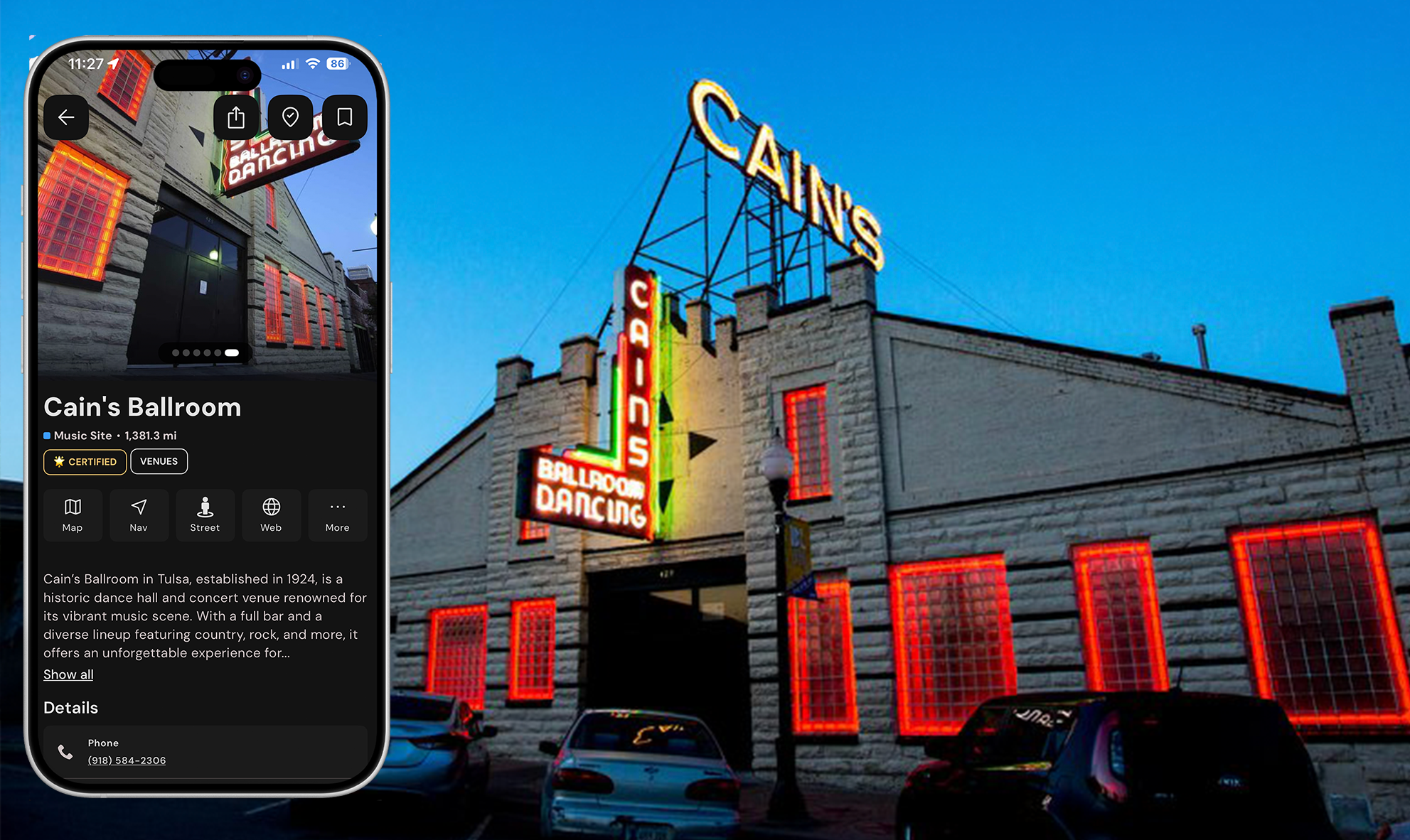
Cain’s Ballroom
Opened in 1924, Cain’s Ballroom had already lived a few lives by the time Bob Wills and His Texas Playboys made their Cain’s debut on New Year’s Night 1935. That’s when the dance hall found the sound that would define it.
Wills was the King of Western Swing — a glorious American cocktail of country, jazz, blues, and big-band swing — and from 1935 to 1942, he and the Texas Playboys packed Cain’s for weekly dances. No wonder the venue became known as the “Carnegie Hall of Western Swing.”
Wills died in 1975, and he probably would have eaten his 10-gallon Stetson if he’d seen what came to Cain’s three years later: the Sex Pistols, crashing through Tulsa on their infamously brief and chaotic U.S. tour.
As Cain’s morphed into a rock club in the ’70s, the list of future giants who came through on their way up is pretty staggering: U2, Van Halen, Metallica, INXS, and plenty more.
Restoration efforts kicked into gear in the 2000s, helping bring Cain’s back up to fighting shape. Today, it books just about everything, but it has become especially sacred ground for Red Dirt and Americana acts: when Turnpike Troubadours returned from a long hiatus, they did so with back-to-back shows on the Cain’s stage.
Cain’s has earned every bit of its legend — except for one piece of longstanding lore. For decades, folks raved about the club’s spring-loaded dance floor giving crowds an extra bounce. When the floor was replaced in 2017, guess what? No springs. We suppose it was just the spirit of Wills keeping audiences light on their feet.
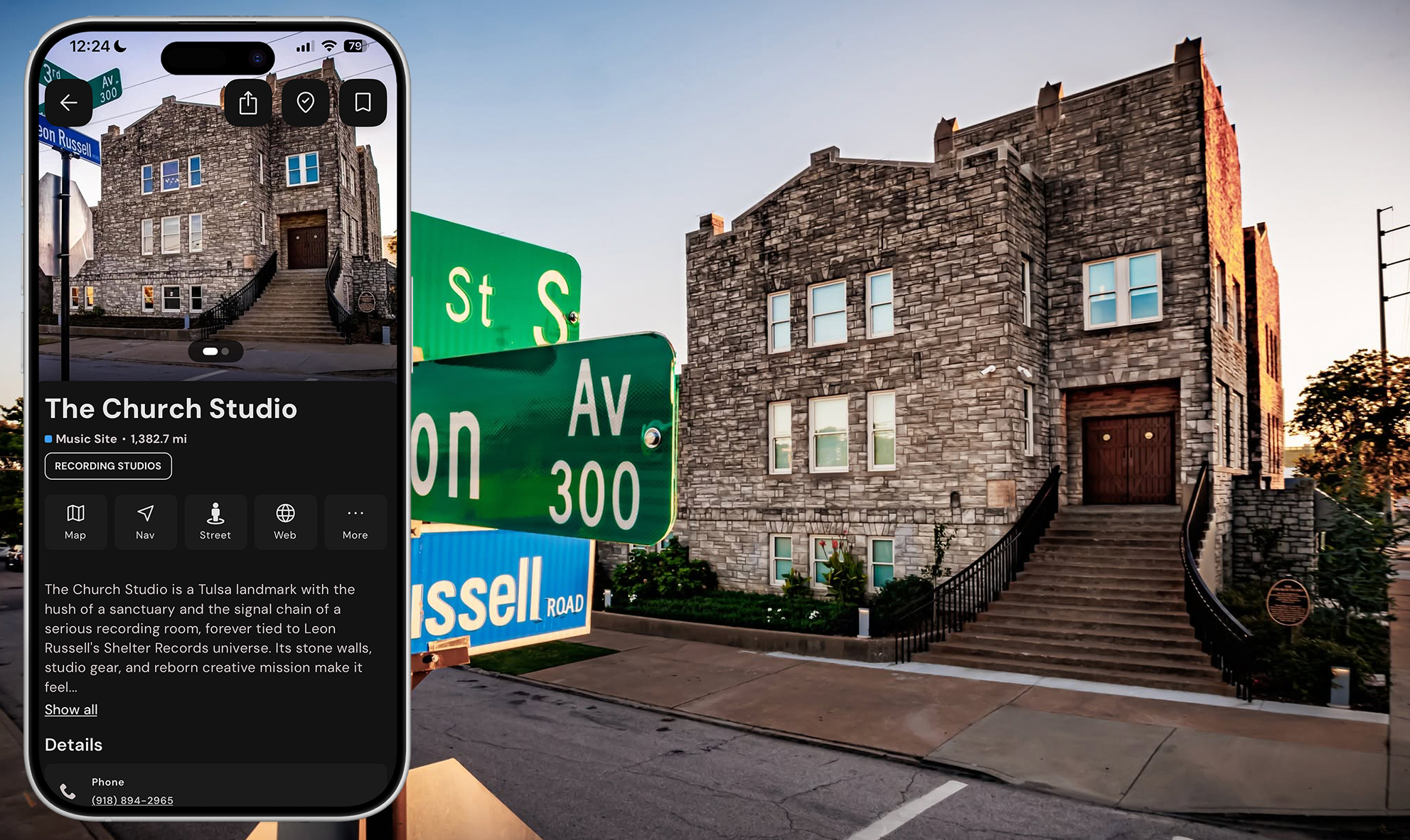
The Church Studio
A few miles from Cain’s, Tulsa’s next great music landmark looks exactly like what it once was: a church. And spirit still flows through this place.
The building dates back to 1915, with its castle-like stone facade added in the 1950s. Leon Russell bought it in 1972 and turned it into The Church Studio, a recording studio and home base for Shelter Records. It became the city’s great creative workshop — and a breeding ground for the “Tulsa Sound.”
JJ Cale, Tom Petty, Willie Nelson, The Gap Band, Freddie King, Eric Clapton, Stevie Wonder, Jimmy Buffett, Kansas, and plenty more are all part of the Church story.
The building was restored and reopened in 2022 as a working recording studio, museum, event space, and public-facing tribute to Russell’s legacy. Visitors are greeted by a 500-pound bronze statue of Leon in full 1972 glory — snakeskin boots, jean jacket, cross, top hat and all — before heading inside for tours that run Monday through Saturday.
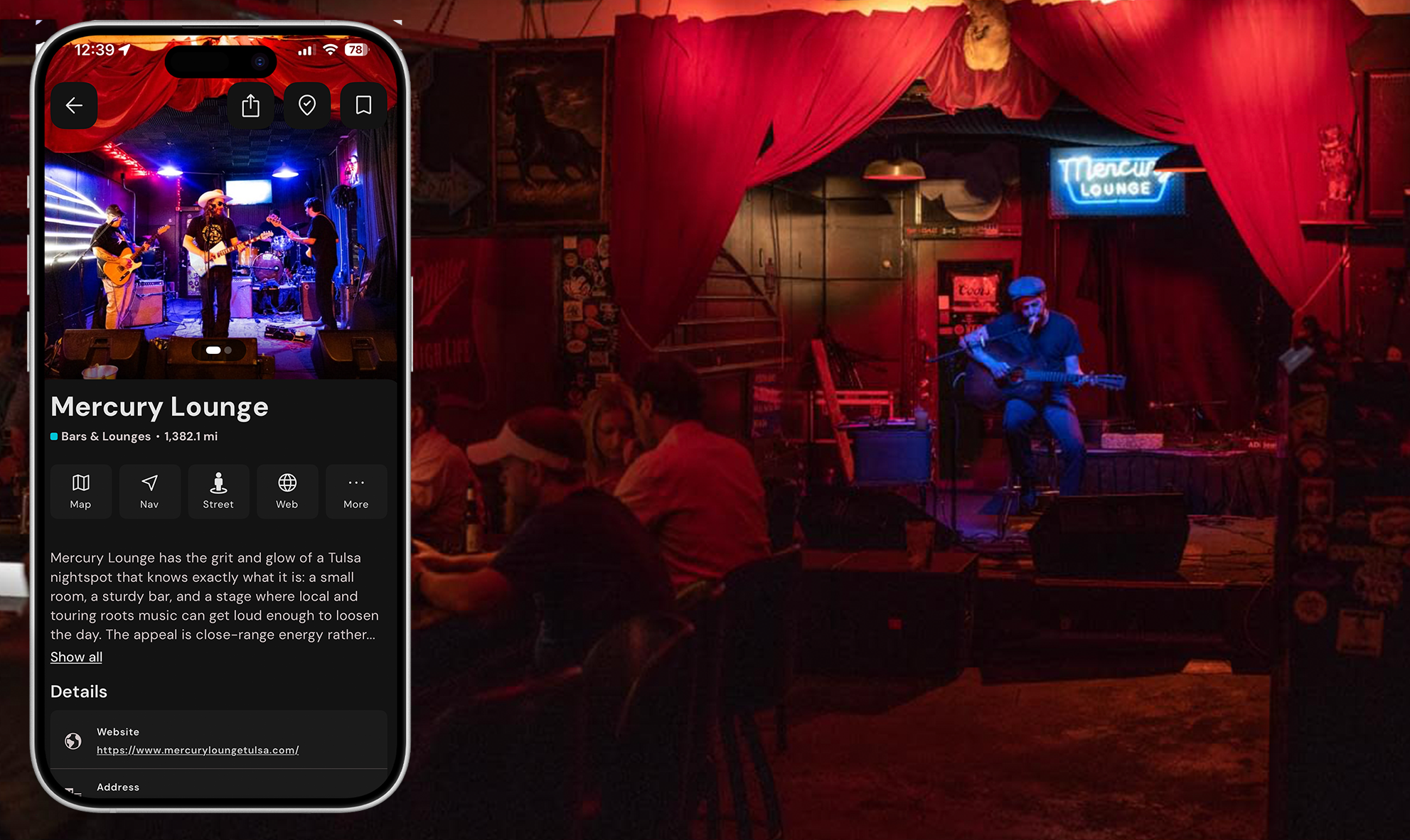
Mercury Lounge
An audience of 80 equals a packed house at Mercury Lounge — “the Merc” to locals — a classic Tulsa dive carved out of a renovated gas station at 18th and Boston.
Despite its size, the Merc has hosted Red Dirt, country, and Americana giants: Turnpike Troubadours, Billy Joe Shaver, and American Aquarium have all come through the room. But its star attraction these days is Sunday Bluegrass Brunch, a weekly noon set led by Johnny Mullenax that has become a must for locals and visitors alike.
Mullenax started the residency in 2021, turning the tiny room into a rowdy party with a rotating cast of Tulsa players. On nice days, the crowd spills into the yard and parking lot.
All they ask is that you follow the one posted rule: “All are welcome here except racists, sexists, homophobes, and a-holes.”
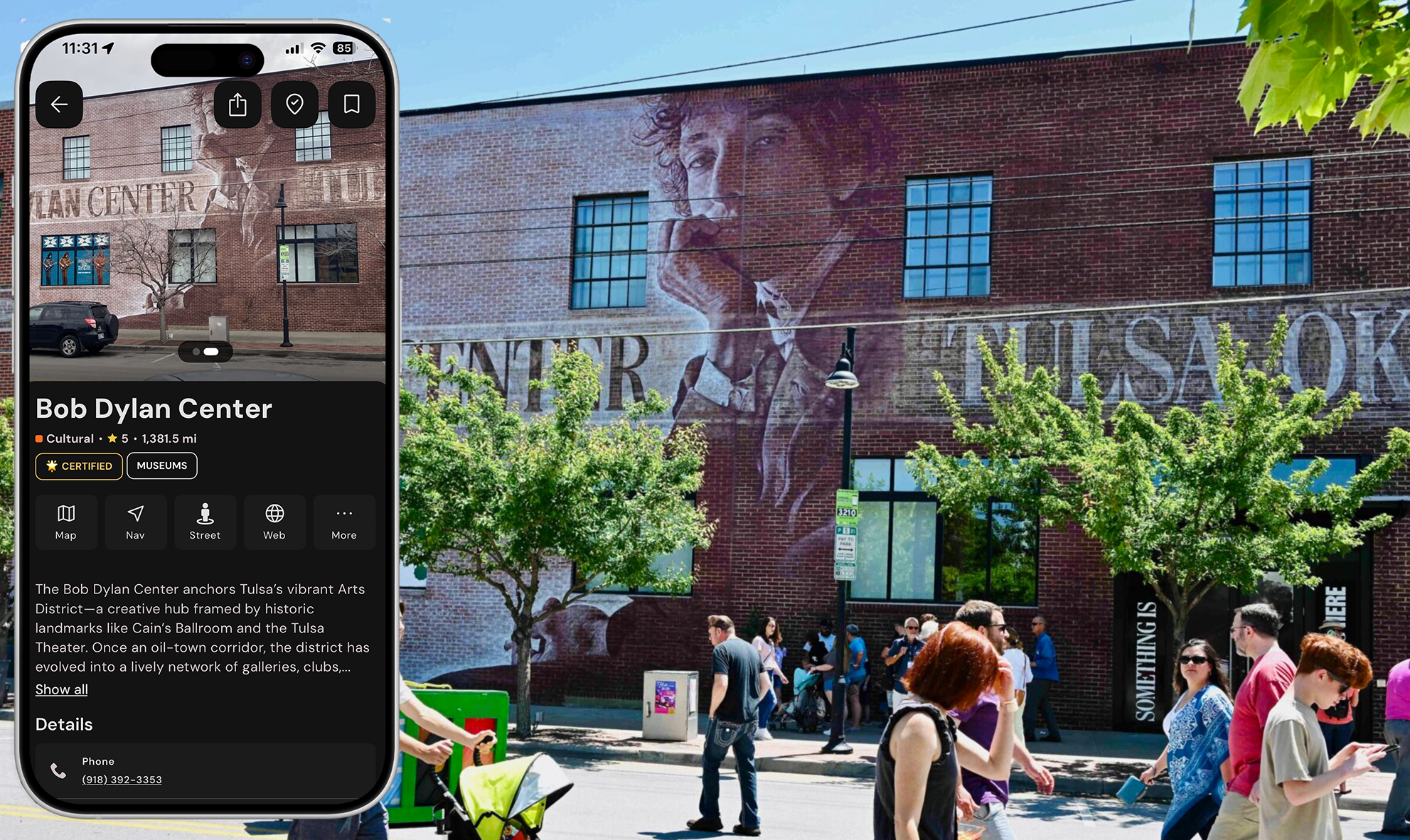
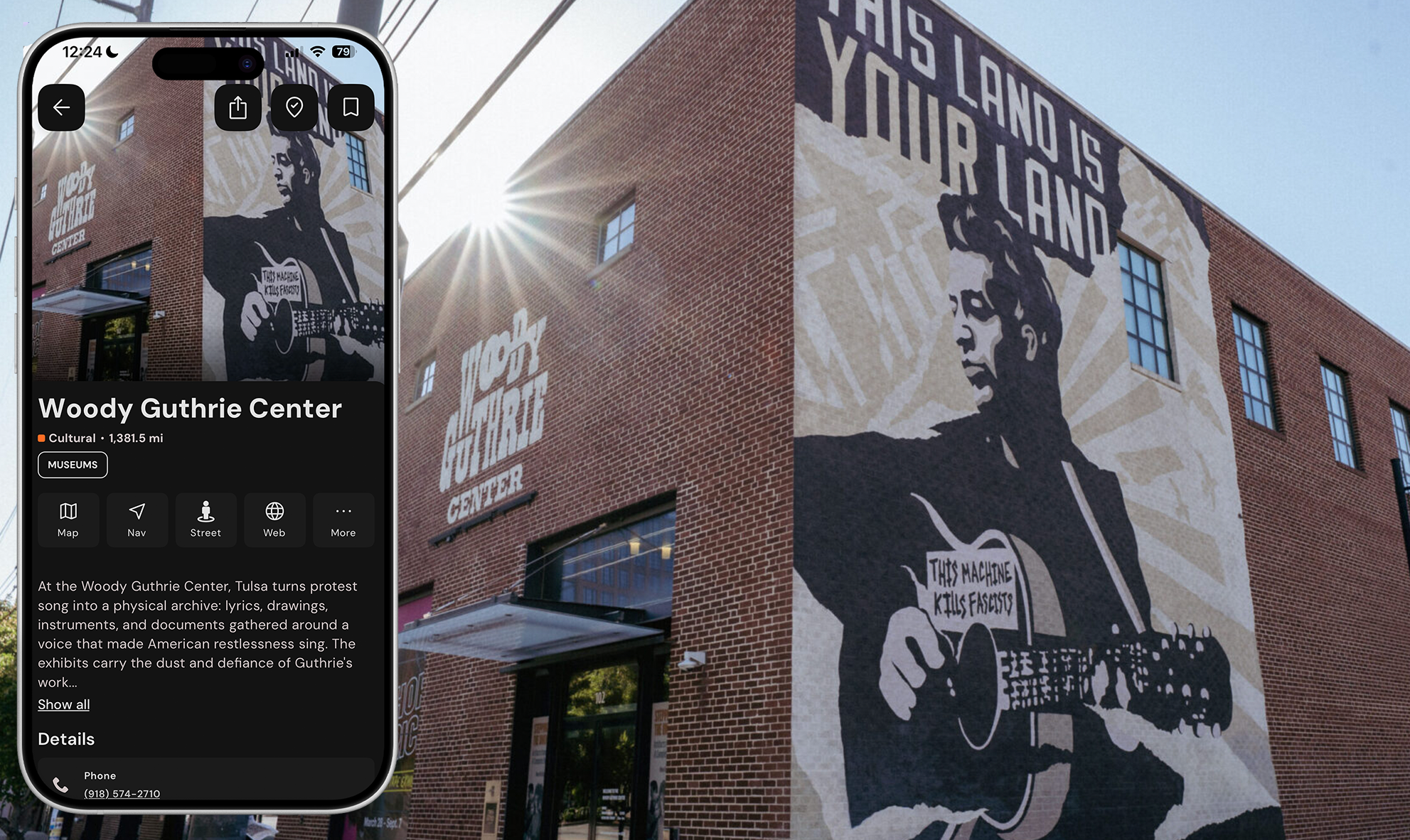
Bob Dylan Center & Woody Guthrie Center
Tulsa’s songwriter pilgrimage is a two-for-one.
The Woody Guthrie Center and Bob Dylan Center sit side by side in the Arts District, which feels only right given the connection between the two men. Dylan idolized Guthrie as a young songwriter, visited him in New York while Guthrie was ill, and paid tribute on his debut album with “Song to Woody.”
Guthrie’s Oklahoma ties are clear: he was born in Okemah, about an hour south of Tulsa, and carried the state’s influence into the American songbook. Dylan’s center ended up next door after the George Kaiser Family Foundation — already behind the Woody Guthrie Center — acquired the Bob Dylan Archive in 2016. Dylan was happy to have his archives included with Guthrie’s work and Native American Nations artifacts.
“To me it makes a lot of sense, and it’s a great honor,” he said.
Together, the centers offer a deep look at two of history’s most influential songwriters, with rotating exhibits, handwritten lyrics, archival recordings, photos and public programs. Dylan’s archive alone includes notebooks with lyrics from the Blood on the Tracks era, the leather jacket he wore at Newport Folk Festival in 1965, and even a 1966 wallet containing Johnny Cash’s contact info and Otis Redding’s business card.
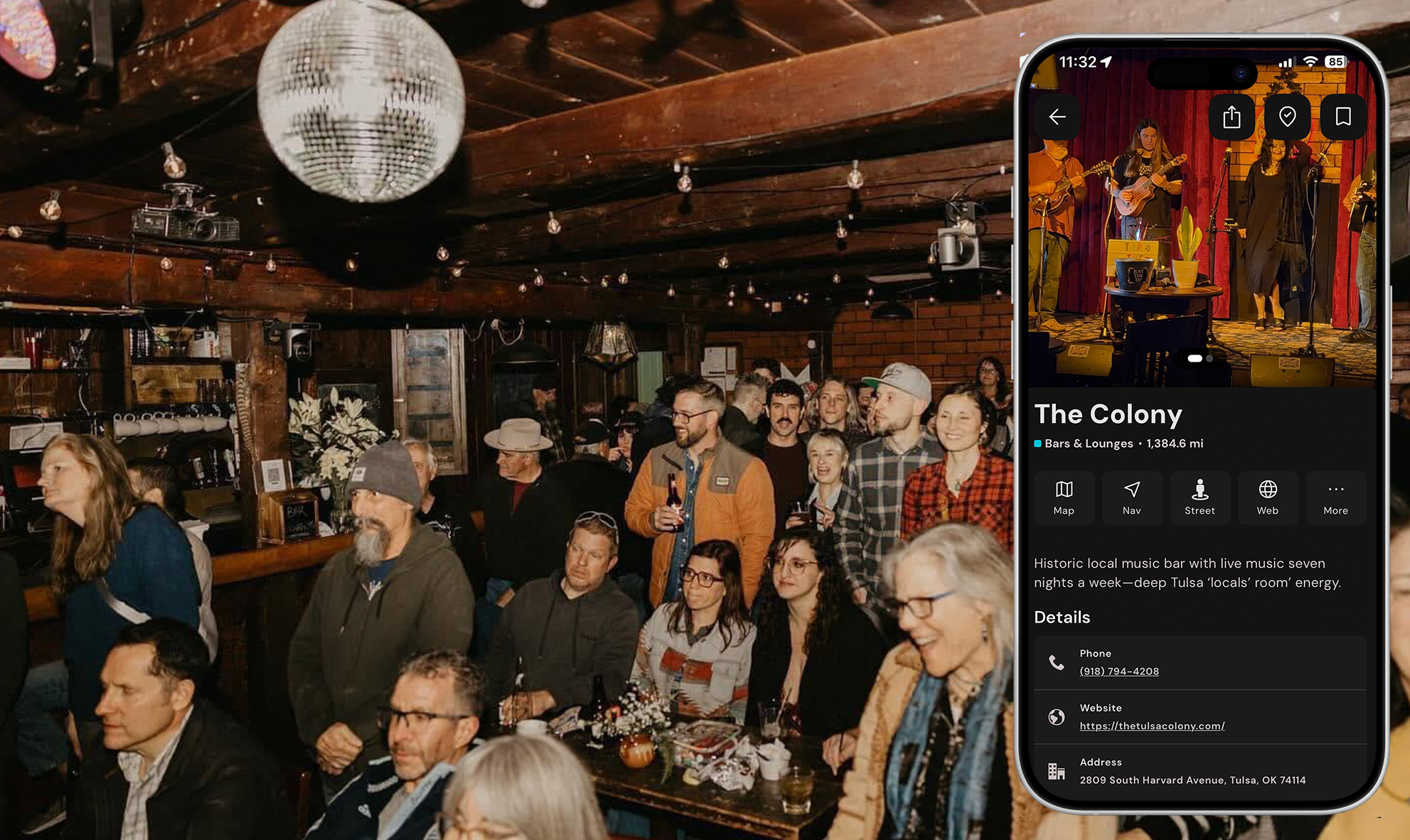
The Colony
At the end of the night, Tulsa usually has a way of sending you to The Colony, which has been pouring drinks on Harvard Avenue since 1958.
Leon Russell owned this place back in the ’70s — though whether that was literal or spiritual may depend on who you ask. JJ Cale and Eric Clapton are said to have thrown a few back here, too, but The Colony isn’t terribly interested in trumpeting its legacy. People love this place for the opposite reason: it’s unpretentious, lived-in, and puts people from a wide range of backgrounds shoulder to shoulder.
A few local musicians took over the keys recently, giving the place some subtle facelifts and keeping the calendar eclectic but approachable. Seven days a week, you’re in for anything from folkgrass jams to hip-hop happy hours and late-night full-band sets.
More Tulsa spots
Brut Hotel
Sharp, stylish hotel just south of downtown, with skyline views and an easy hop to the Tulsa Arts District.
LowDown
Intimate listening room with a jazz-club feel and a roots-friendly calendar.
Memorial Park Cemetery
Leon Russell’s final resting place, marked by a large black granite monument.
Soundpony
Beloved Tulsa bar with DJs, live music, bikes, and a cool oddball streak.
Leon Russell mural
A colorful Tulsa tribute to the Master of Space and Time.
Tulsa Theater
Historic downtown room hosting major touring concerts, comedy, and live events.
Center of the Universe
Oddball acoustic landmark where your voice echoes back in a way only you can hear.
Josey Records Tulsa
Large, well-stocked record store for new and used vinyl, CDs, cassettes, and gear.
Guthrie Green
Arts District park with free concerts, festivals, food trucks, and room to linger.
The Vanguard
Downtown venue for local bills, touring bands, punk, indie, metal, hip-hop, and comedy.
The Outsiders House Museum
Restored house from The Outsiders, later bought and preserved by House of Pain’s Danny Boy O’Connor.
OKPOP Museum
Long-awaited museum-in-progress dedicated to Oklahoma’s music, film, television, comics, and pop culture.
Visit Tulsa
Official tourism hub for current events, neighborhoods, restaurants, attractions, and trip planning.