In the Press
They Gave Artists a Stage.
Now They’re Giving Cities a Map.
Ronnie and Amy Wright built their careers in tech, but they live for live music. Their new venture, Music Roadtrip, is the perfect marriage of their talents and passion.
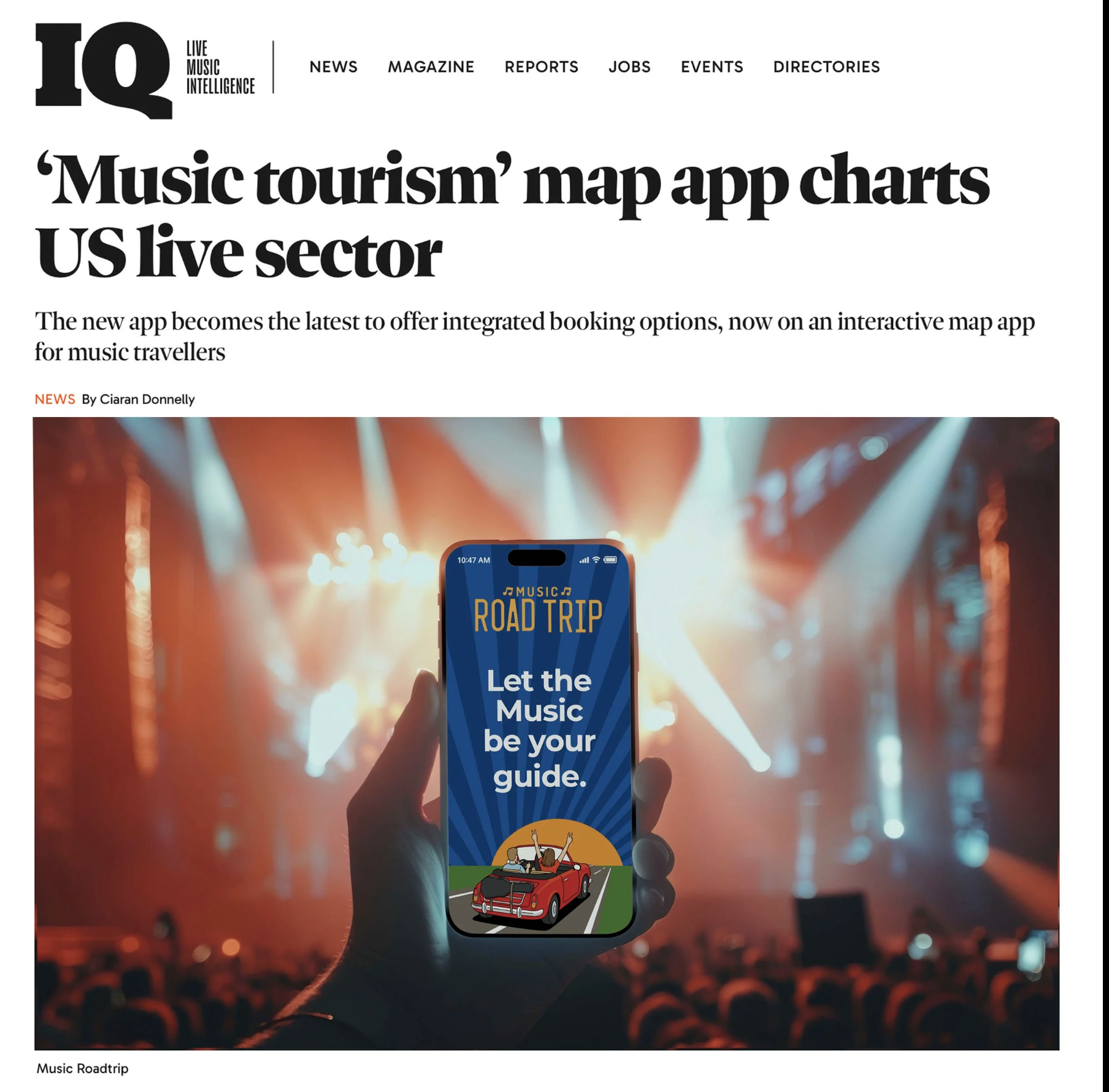
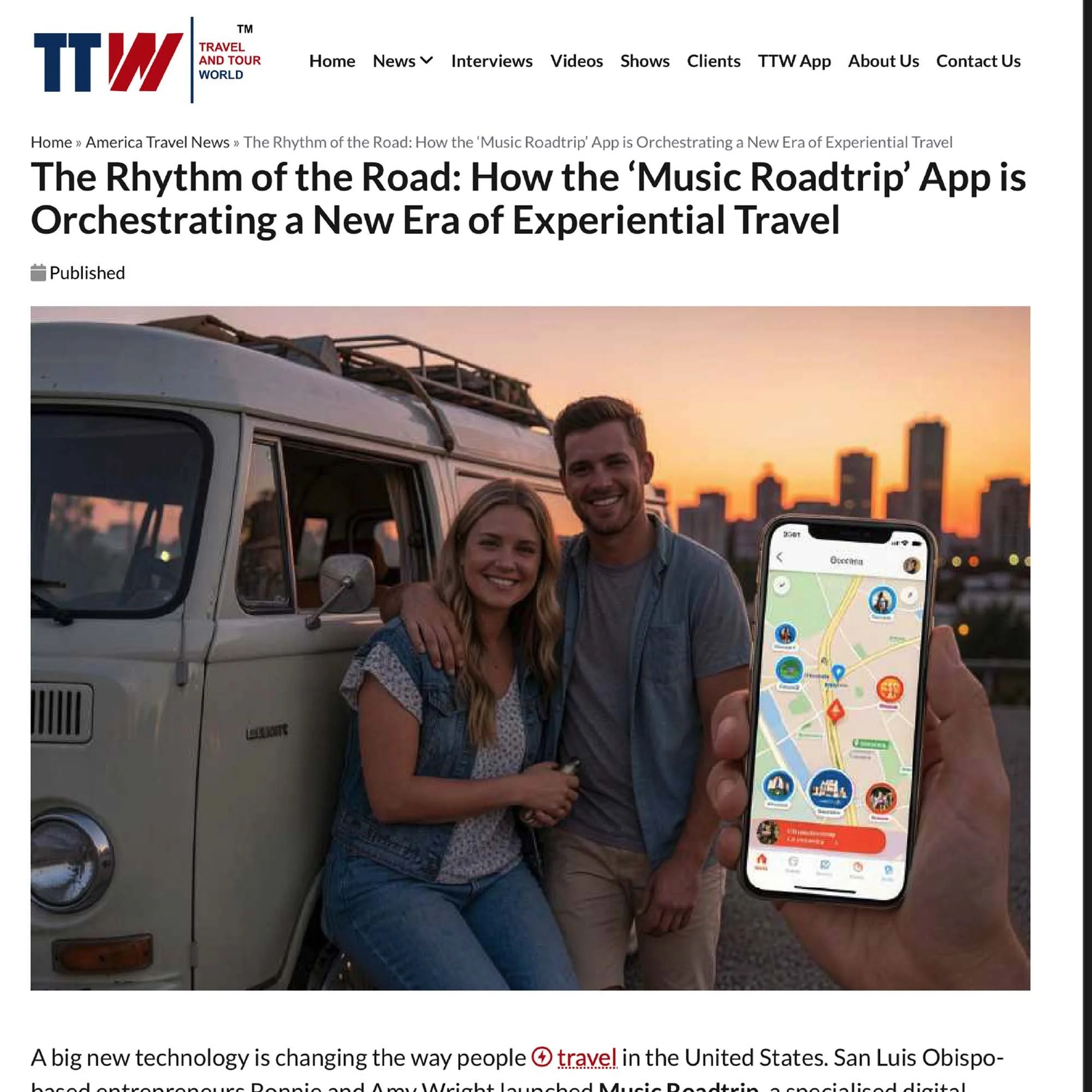
A free travel app for music fans, Music Roadtrip allows users to pull up a map anywhere in the U.S. and find independent music venues, historic stages, locally owned record stores, festivals, landmarks and more. It helps people experience a city’s culture and history through the music that shaped it.
The Wrights know just how important that is.
Before they found their way to the tech world, they were musicians first. Ronnie played drums and guitar in regional bands on the West Coast and operated a recording studio in Telluride, Colorado. Amy sang and played fiddle in several bands in the D.C. area.
As their careers took off, Ronnie in interactive media and Amy in IT consulting, music remained a lifeline. When they first met, they bonded over a shared love of live shows and classic albums. For their wedding in Amy’s hometown of Memphis, they hired soul combo The Memphis Ice Breakers and danced all night to live covers of Al Green and Otis Redding.
In 2014, the couple launched their first music-centered venture. They founded DittyTV, a 24-hour television network showcasing Americana and roots artists.
They transformed a floor of their Memphis home into a dedicated studio. Ronnie busted concrete, hung sheetrock and wired everything himself. Amy built relationships, reaching out to local independent artists and musicians passing through town.
Over the next decade, they filmed more than 450 shows, including performances by Sierra Ferrell, Molly Tuttle and Larkin Poe before their Grammy wins. The Wrights gave every artist a copy of the multi-camera footage for free, to use however they wanted.
“That was unheard of,” Ronnie says. “But it helped them build their careers. That mattered to us.”
Eventually, the Wrights took DittyTV on the road. They wanted to create something for music lovers akin to Diners, Drive-Ins and Dives, shining a light on the venues and businesses that keep real music scenes humming.
They drove their van to towns like Clarksdale, Mississippi, tracking down Delta blues juke joints still running on cash bars and hand-painted signs. They rolled into Macon, Georgia, where they explored the scene that shaped Little Richard and the Allman Brothers Band.
They met great people, uncovered hidden history and heard live music at every turn. They also realized how much work it took to find those places.
“Everywhere we traveled, it was still hard to find authentic music spots,” Amy says. “You’d have to piece it together from Instagram, random web feeds and outdated listings. There was no single resource to find the real culture of a town.”
They also knew they weren’t alone. In the 2020s, music tourism has surged, with festivals and major concert runs drawing fans across state lines for shared live experiences.
And even when music isn’t what set the itinerary, it is often how culturally curious visitors connect once they arrive, ducking into a club, browsing a neighborhood record shop or standing in an unassuming room where something lasting was created.
All of this set the wheels in motion for Music Roadtrip, which launched on iOS and Android in early 2026.
The app is the result of years of planning, coding and optimization – Ronnie’s department. Along with his musical background, he built his first computer at age nine and was teaching a computer course to fellow students by high school.
“A big part of it is the challenge,” he says. “Can you solve the problem? Can you make it work? That’s always been a driver.”
“He can be perfectly happy by himself in a basement building something,” Amy says. “I’m the opposite, so we’ve always worked well as a team. He invents and builds, and I help shape it, position it and get it in front of people.”
The human element is central to Music Roadtrip. The Wrights say other music travel databases fall short because they ignore it.
Instead of relying solely on APIs and algorithms, Music Roadtrip is building a team of “ambassadors”: business owners, musicians and other longtime locals who know their scenes and can uncover authentic spots in ways search engines cannot.
At the same time, the app is powered by robust technology behind the scenes, with seamless integrations into ticketing and streaming platforms, ride-sharing services and travel booking apps. It makes it easy to discover a show, hear the music and plan the trip in one place.
That blend of human input and tech muscle is also what fuels one of the app’s key features:
The Certified Music Region program.
Music Roadtrip is working directly with local municipalities to identify every music destination in the region, enrich and verify the data, then launch and support a custom-branded app experience that brings the entire scene to life.
Memphis, Tennessee
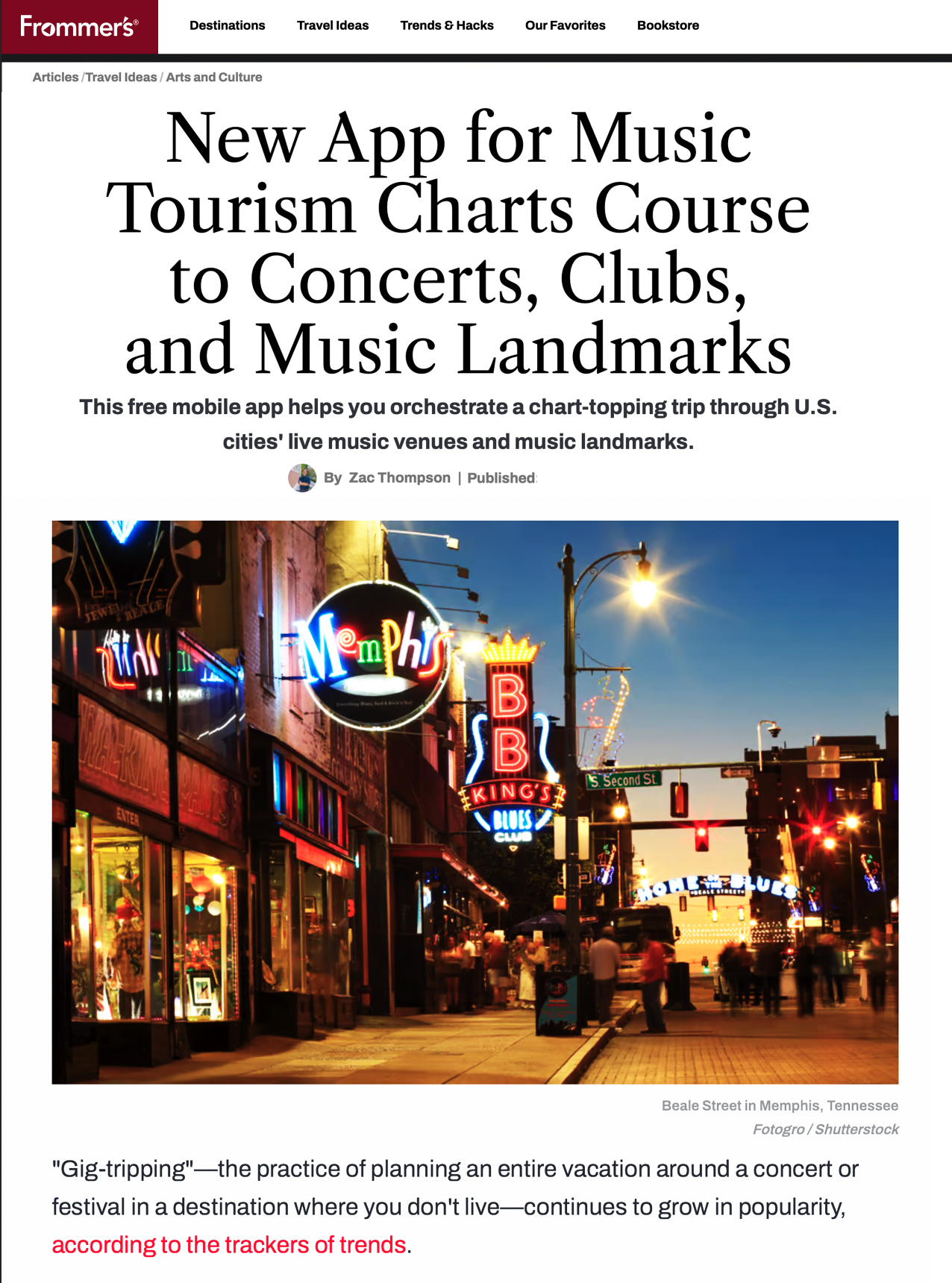
Shortly after launch, Memphis became Music Roadtrip’s first Certified Music Region. It’s personal for the Wrights – but it’s also one of the most musically rich cities in America, layered with blues, soul, gospel, rock and hip-hop history.
Each location will be geo-coded, connected to related sites and layered with context, turning Memphis into a living, navigable music map rather than a list of attractions. A visitor might come for Elvis Presley, but they’ll leave knowing about Al Green’s Royal Studios sessions, the Stax Records legacy, and the new generation of soul and blues artists lighting up local stages each weekend.
For the city, the benefit is clear. Visitors explore beyond the obvious stops, spread their spending into surrounding neighborhoods and experience the full arc of Memphis music culture.
This is what it looks like when you map a music scene properly,” Ronnie says. “You don’t just play the hits. You connect the whole story.”
Music Roadtrip’s mission goes beyond the app, too. Each week, The Seeker newsletter – written by former USA Today music reporter Dave Paulson – highlights a great American music town, with input from the locals who keep the scene humming.
The Wrights built Music Roadtrip the same way they built their Memphis studio: methodical, hands-on, solving one problem at a time.
The backend is complex. The integrations are seamless. But the point is simple: help travelers reach the real heart of a place, and let the music be their guide.