
Where Chicago music history still lives
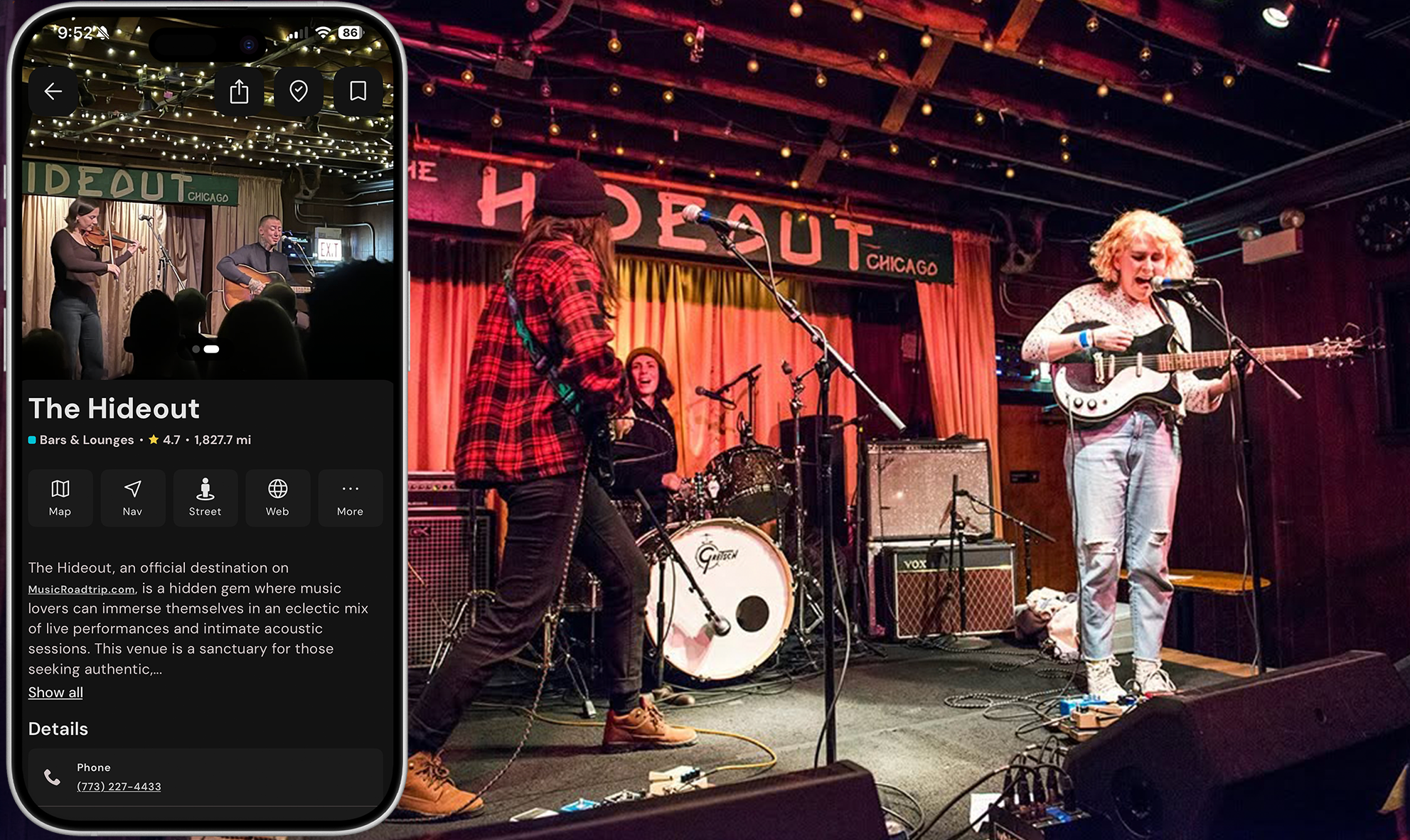
This week, we're exploring five indispensable forms of American music —via Chicago.
How does one city get so good at so many kinds of music? Chicago invented a few, and put a distinct spin on countless others.
House music grew out of the city’s underground clubs. Modern gospel took shape inside its Black churches. Musicians carried Delta blues north, plugged in and created a louder, tougher sound that became known around the world as Chicago blues.
The city’s folk scene nurtured John Prine and Steve Goodman. Wilco became elder statesmen of indie rock and Americana. Chicago has produced conscious hip-hop giants Common and Chance the Rapper, while also giving rise to drill, and of course, Kanye West.
Each of these five, distinctly Chicago spots tells an important part of the story, and gives travelers something meaningful to see, hear or do.
We’ll start — as American music often does — with the blues.
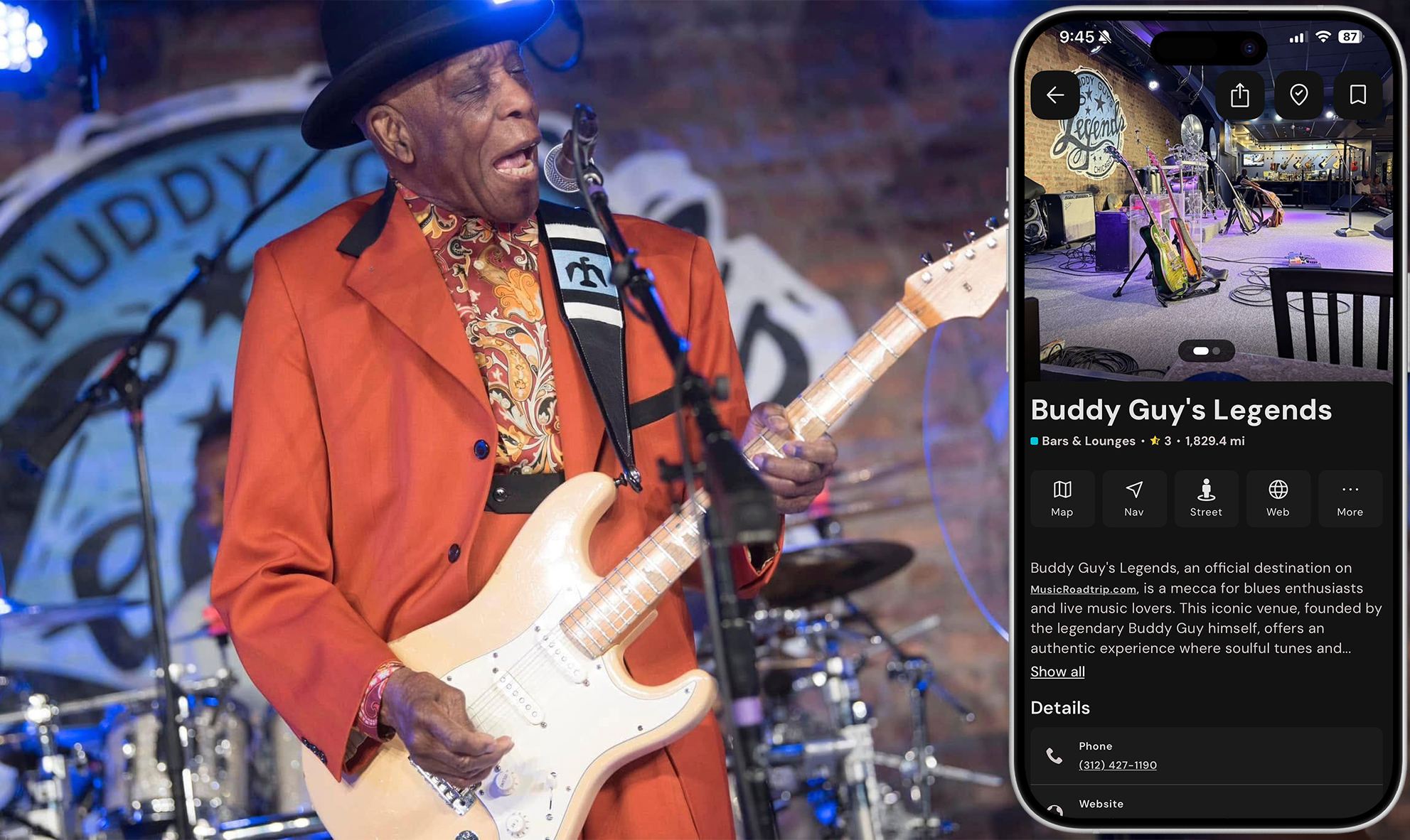
Buddy Guy’s Legends
Buddy Guy opened Legends, in part, because Chicago’s blues clubs kept closing.
Guy arrived from Louisiana in 1957, working his days as a tow-truck driver and spending his nights learning from Muddy Waters, Howlin’ Wolf and other giants of the city’s blues scene. He eventually recorded for Chess Records and became one of the most influential electric guitarists alive.
In 1972, Guy and L.C. Thurman opened the Checkerboard Lounge on the South Side. That club hosted a famous 1981 jam featuring Muddy Waters, Guy, Junior Wells and the Rolling Stones. Guy left the Checkerboard in 1985 and opened Legends four years later, just before his album Damn Right, I’ve Got the Blues introduced him to a much larger audience.
Legends moved one block north to its current South Loop home in 2010. Today, the club presents local and touring blues artists throughout the week, along with regular jam nights. Guy’s annual January residency remains its signature event, drawing fans from around the world during the coldest stretch of the Chicago winter.
Even when Guy isn’t onstage, he’s everywhere in the room. The walls and bar are filled with photographs, guitars and memorabilia from his career, including a guitar Keith Richards presented to him in the concert film Shine a Light.
Seating is first come, first served, so arrive early.
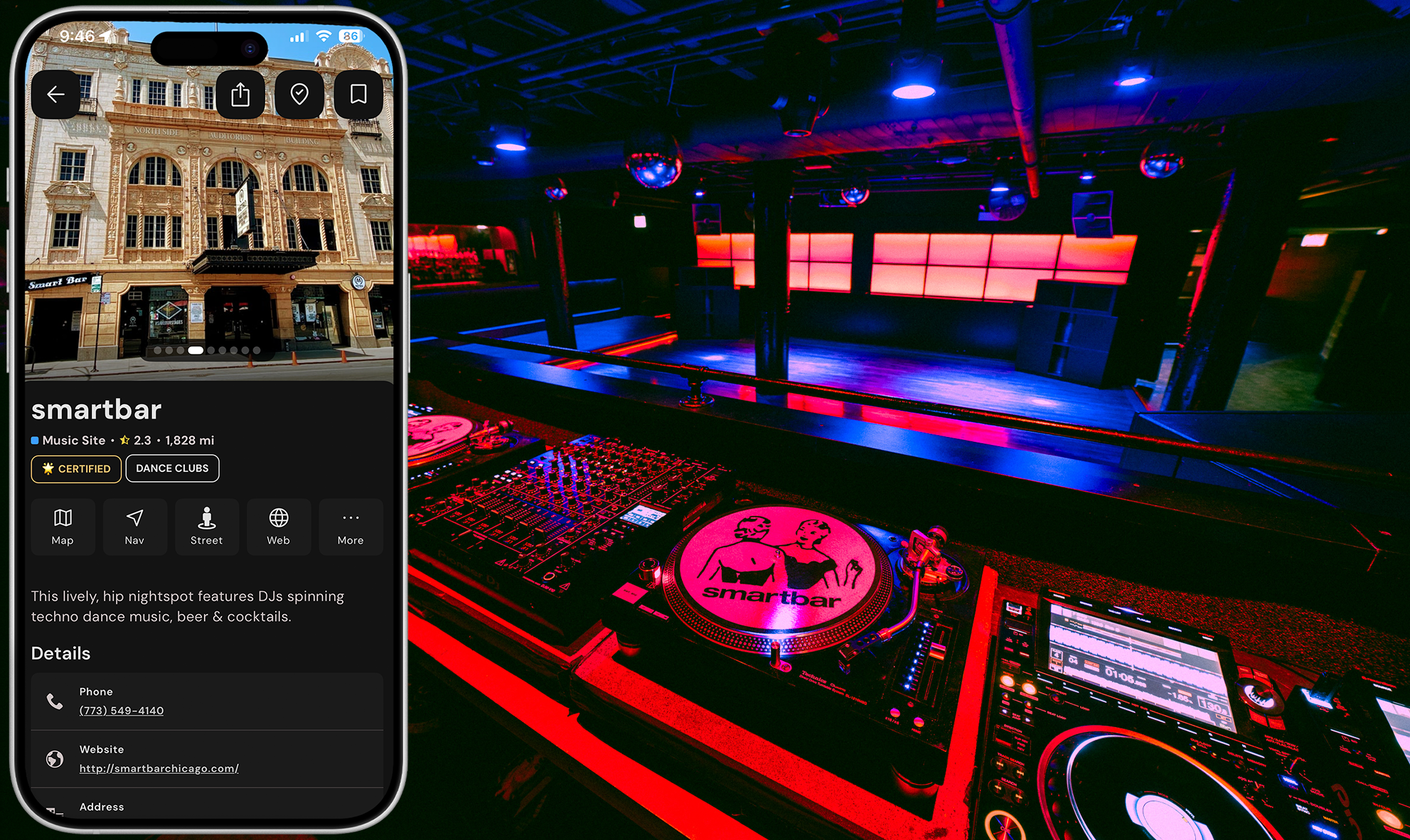
smartbar
From Madonna to Gaga, house music has inspired some of the biggest hits of all time. But smartbar keeps house underground—literally.
Located in the basement beneath Metro, smartbar has spent more than 40 years presenting Chicago DJs alongside influential artists from around the world. Frankie Knuckles, whose sets at the Warehouse helped give house music its name, was the first DJ hired to play the club.
smartbar’s calendar reaches into techno, disco and experimental electronic music, but its Chicago house lineage remains strong. Past and present residents include Derrick Carter, Mark Farina, Kaskade, Michael Serafini and other artists who have helped carry the city’s dance music into new decades.
On Sundays, Queen! turns the club into a weekly celebration of house music and LGBTQ+ nightlife. Resident DJs Derrick Carter, Michael Serafini and Shaun J. Wright share the room with visiting artists, drag performers and hosts Lucy Stoole and Nico. The party has been running since 2012.
smartbar is open late Friday through Sunday and admits only guests 21 and older. Bring a physical ID and plan on staying out well past bedtime.
You can turn this into a three-stop house pilgrimage. Start at the landmarked building that once housed the Warehouse, at 206 S. Jefferson St. on Frankie Knuckles Way. Then browse the bins at Gramaphone Records, the longtime dance-music shop owned by Queen! resident Michael Serafini, before ending the night at smartbar.
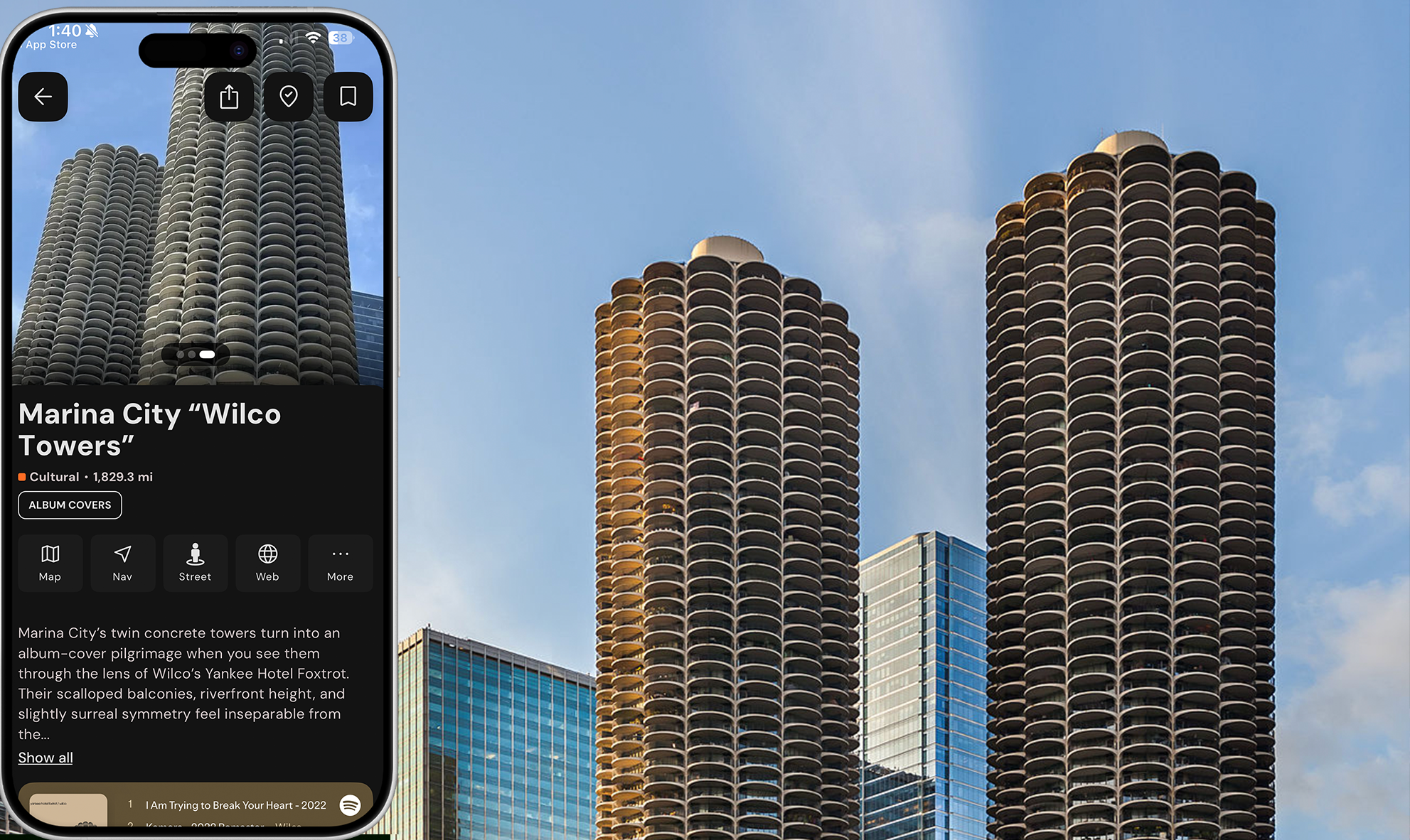
Marina City (The “Wilco Towers”)
How does a pair of apartment towers become an indie-rock pilgrimage site? Put them on the cover of Yankee Hotel Foxtrot.
Bertrand Goldberg’s twin Marina City towers were already Chicago landmarks when Wilco chose them for its 2002 album. After that, plenty of music fans started calling them the “Wilco Towers.”
Designer Lawrence Azerrad created the spare cover using a photograph by Sam Jones. The photograph’s angled view of the honeycombed towers made a fitting cover for an album recorded during one of the most turbulent periods in Wilco’s history.
Reprise Records rejected the finished project and released Wilco from its contract. The band streamed the album online, signed with Nonesuch Records and watched Yankee Hotel Foxtrot become its best-selling release and one of the defining albums of the 2000s.
The towers are residential, but they’re easy to see and photograph from the Chicago Riverwalk, the State Street Bridge or an architecture cruise. The larger Marina City complex also includes restaurants, a hotel and the House of Blues.
You can keep the Wilco tour going at the Hideout. Jeff Tweedy and Wilco have played the tiny industrial-corridor venue many times, and Tweedy has described it as the Chicago room that feels most like home. The Hideout changed hands this year after three decades under the same owners, but new owner Teri O’Brien is a former employee and performer who has pledged to preserve its spirit.
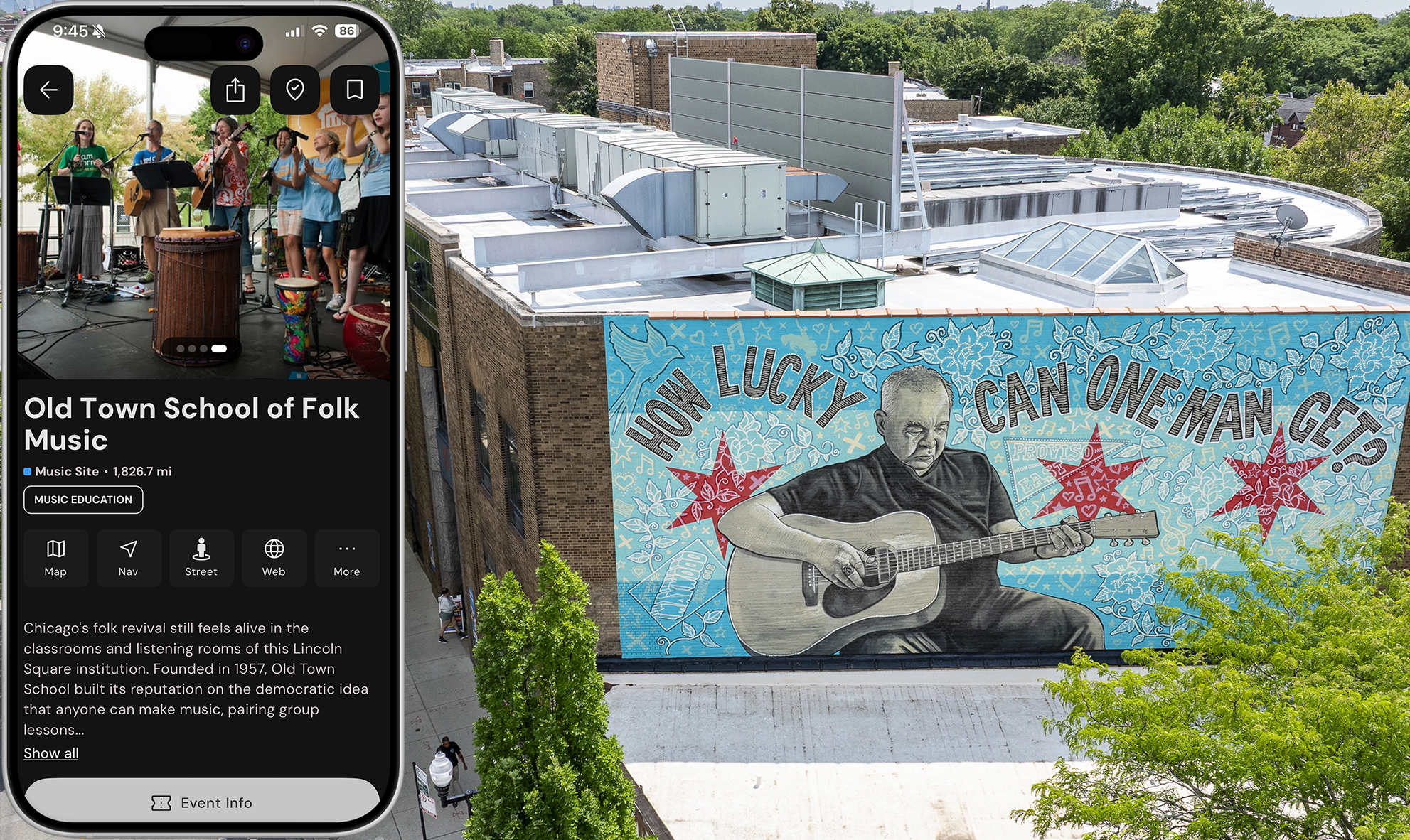
Old Town School of Folk Music
At the Old Town School of Folk Music, everybody gets to take a verse.
The school opened in 1957 with an approach that emphasized playing songs together in groups. Students learned through participation, listening and community, creating a musical environment where beginners were welcome right alongside experienced performers.
That approach helped turn the school into a center of Chicago’s folk revival. John Prine, Steve Goodman, Roger McGuinn, Bonnie Koloc and Bob Gibson all studied there. Prine studied guitar at the school as a teenager before making the leap from Chicago mail carrier to one of America’s most celebrated songwriters.
The school eventually moved out of the Old Town neighborhood but kept the name. Its main Lincoln Square campus opened in 1998 inside a restored Art Deco library, with classrooms, an instrument shop and the intimate Maurer Concert Hall.
Travelers can attend a concert, browse the music store, sign up for a workshop or join one of the school’s communal jams. Most World Music Wednesday performances are free, with a suggested donation.
There’s also a new reason to stop by: a large John Prine mural was added to the Lincoln Square campus this summer, with references to his mail route, his Chicago roots and his friendship with Goodman.
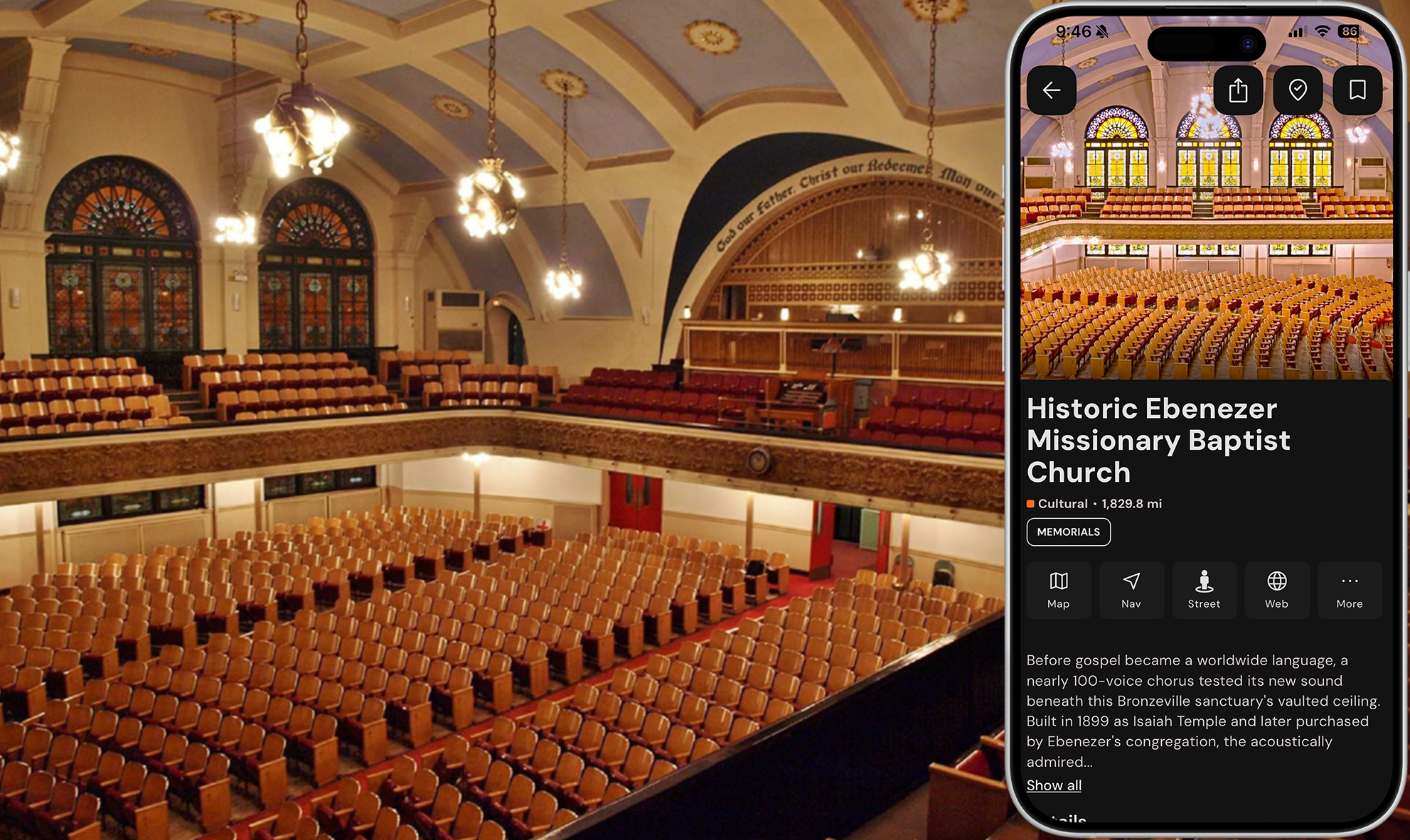
Historic Ebenezer Missionary Baptist Church
One of America’s most influential musical movements took shape inside this Bronzeville church.
The building now occupied by Historic Ebenezer Missionary Baptist Church opened in 1899 as Isaiah Temple, a synagogue designed by Dankmar Adler. Ebenezer, founded in 1902, moved into the building in 1921 as Bronzeville’s Black population grew during the Great Migration.
A decade later, Thomas A. Dorsey, Theodore Frye and Roberta Martin organized what is recognized as the first modern gospel choir. Their music brought the feeling and rhythms of the blues into the church, helping create a new spiritual sound that spread across the country.
Mahalia Jackson, Sallie Martin and Dinah Washington were among the singers connected to Ebenezer in the years that followed. A young Bo Diddley also played violin in the church orchestra, long before he helped shape rock ’n’ roll.
Ebenezer celebrated its 124th anniversary this summer. The congregation continues to worship in the historic building while raising money for restoration and working to strengthen its role as a Bronzeville community hub.
Visitors are welcome at the church’s 11 a.m. Sunday service. Expect gospel, contemporary worship and hymns, and feel free to clap, sing or just listen. Check the current schedule before visiting and be respectful of the active congregation.
More Chicago Spots
Green Mill
Century-old Uptown jazz club with nightly music and an old Al Capone connection.
Jazz Showcase
Long-running South Loop club presenting local players and national jazz greats.
Metro
Landmark alternative venue upstairs from smartbar, with deep ties to R.E.M., Nirvana, Liz Phair and the Smashing Pumpkins.
Empty Bottle
Beloved indie, punk and experimental club with a proudly unpolished atmosphere.
Thalia Hall
National touring acts inside a beautifully restored Pilsen opera house.
Kingston Mines
Two stages of blues running late into the night in Lincoln Park.
Blue Chicago
Intimate River North club centered on contemporary Chicago blues.
Willie Dixon’s Blues Heaven Foundation
Museum inside the former Chess Records building where Muddy Waters, Howlin’ Wolf, Chuck Berry and Etta James recorded.
Ramova Theatre
Restored Bridgeport movie palace reopened as a concert hall with backing from Chance the Rapper, Jennifer Hudson and Quincy Jones.
The Salt Shed
Major indoor and outdoor venue built into the former Morton Salt complex.
Chicago Theatre
Famous marquee, grand auditorium and a calendar filled with music, comedy and touring productions.
Symphony Center
Home of the Chicago Symphony Orchestra and one of the city’s great concert halls.
Reckless Records
Three Chicago shops packed with new and used vinyl, CDs and local releases.
Dusty Groove
Destination record store with especially deep soul, jazz, funk, Latin and global sections.
Choose Chicago
Official trip-planning hub for lodging, neighborhoods, restaurants and events.
